[language-switcher]

China Best Petroleum Refining Catalysts Manufacturers

China has become a major center for refining technology, capacity, and catalyst manufacturing. Its scale is substantial. The U.S. Energy Information Administration reported China’s refinery capacity at approximately 18.5 million barrels per day in 2023. This large operating base creates strong demand for fluid catalytic cracking, hydroprocessing, reforming, and residue-upgrading solutions.

The market is also changing quickly. The International Energy Agency’s Oil 2024 report highlights continued refining-capacity expansion in Asia, while stricter fuel-quality rules increase pressure on sulfur removal and emissions control. In this environment, Petroleum Refining Catalysts must deliver more than high initial activity. They must maintain performance under changing feedstocks, protect unit reliability, and support lower hydrogen consumption. James G. Speight, a recognized petroleum-refining author and consultant, describes catalysts as “the heart of the refinery.” That idea remains practical beside a hot reactor and a catalyst-regeneration system.

This guide examines China’s best Petroleum Refining Catalysts manufacturers through technical capability, production consistency, application experience, and service support. It considers catalyst pore structure, metal tolerance, regeneration behavior, and commercial operating results. Factory scale alone is not enough. Neither is a polished product brochure. Rankings can be imperfect, because public performance data is often limited and refinery conditions differ widely. Buyers should therefore verify pilot-test results, quality certificates, replacement cycles, and field references before making decisions. A supplier that performs well in a clean feedstock may struggle with heavier, higher-sulfur material. That detail matters. Reliable selection requires evidence, not assumptions.
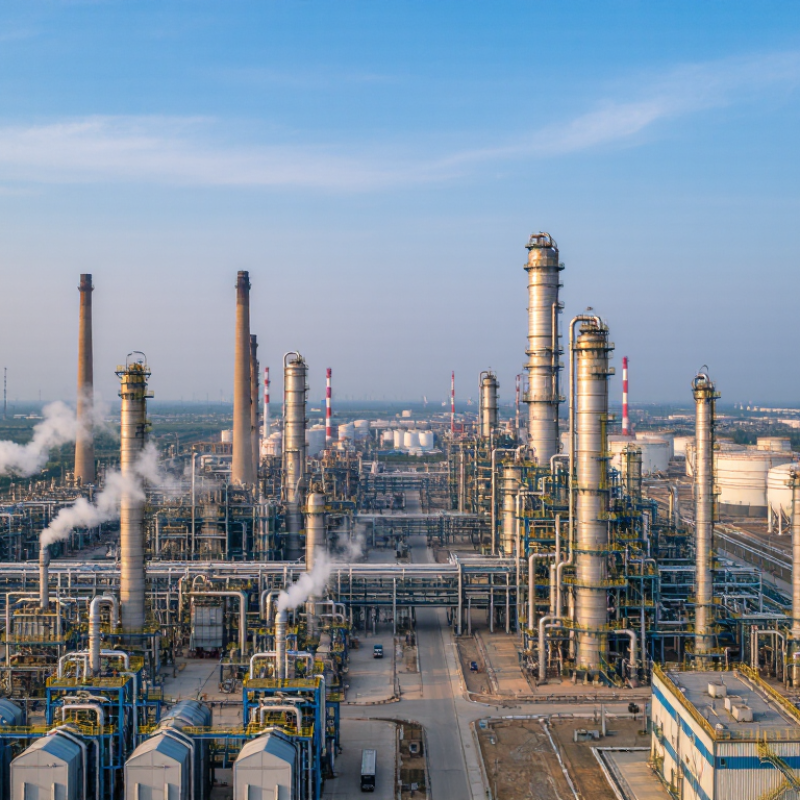
China Best Petroleum Refining Catalysts Manufacturers

Petroleum Refining Catalysts: Types, Functions, and Industrial Uses

Petroleum refining catalysts control how crude oil becomes cleaner, lighter, and more valuable products. Fluid catalytic cracking catalysts convert heavy gas oils into gasoline and light olefins. Hydrotreating catalysts remove sulfur, nitrogen, and metals with hydrogen. Hydrocracking catalysts produce cleaner diesel and jet fuel. Reforming catalysts raise gasoline octane and generate hydrogen for other refinery units.

The market remains technically important. The International Energy Agency’s Oil 2024 report projects global oil demand will reach 105.6 million barrels per day by 2029. OPEC’s World Oil Outlook 2045 gives a higher long-term demand estimate, reaching about 116 million barrels per day by 2045. These different forecasts show why refinery flexibility matters. Catalyst suppliers in China increasingly support tailored formulations, shaped by feedstock quality, reactor temperature, pressure, and regeneration cycles.

Small details matter. A high-metal crude can poison active sites quickly. Excessive heat can increase coke and reduce catalyst life. Operators therefore monitor pressure drop, sulfur slip, conversion, and product quality continuously. In practice, the best catalyst is not always the most active one. Stable performance may be more valuable than a short conversion peak. That judgment still involves uncertainty. Pilot tests can underrepresent real refinery conditions, especially when crude blends change unexpectedly. Reliable manufacturers should provide traceable testing data, technical guidance, and clear replacement criteria, rather than relying on impressive but incomplete claims.

China’s Petroleum Refining Catalyst Manufacturing Landscape

China’s petroleum refining catalyst manufacturing landscape has grown around a broad industrial base. Producers supply hydroprocessing, catalytic cracking, reforming, and sulfur-control applications. Their capabilities often begin with alumina, zeolite, and metal-support preparation. Factory visits commonly reveal mixing lines, calcination furnaces, pellet-forming equipment, and laboratory reactors. These details matter because catalyst performance depends on pore structure, metal dispersion, mechanical strength, and consistent moisture control.

Experienced manufacturers usually connect production data with refinery operating conditions. They test activity, selectivity, attrition, crush strength, and resistance to poisons such as sulfur or metals. Independent analysis can verify surface area, pore volume, and chemical composition. Technical teams also adjust formulations for local feedstocks, since crude quality changes catalyst life. Compliance with emissions, transport, and waste-handling requirements should be documented, not merely promised.

The landscape is competitive, yet uneven. Some suppliers offer impressive pilot results but limited long-term field evidence. Buyers should request traceable batches, change-control records, and service response procedures. A catalyst that performs well in a laboratory may behave differently after months of thermal cycling. This is where practical experience becomes visible. More transparent data would strengthen trust across the sector. Manufacturers also need to examine energy use and spent-catalyst management, areas that can be treated as afterthoughts. The sector still has blind spots.

Key Technologies Used by Leading Chinese Catalyst Manufacturers

China Best Petroleum Refining Catalysts Manufacturers

Chinese catalyst manufacturers increasingly focus on process control, material science, and measurable refinery performance. Their key technologies include zeolite design for fluid catalytic cracking and metal dispersion for hydrotreating applications. Engineers adjust pore size to help large hydrocarbon molecules reach active sites. Small structural changes can affect conversion, selectivity, and catalyst life.

Manufacturing begins with carefully prepared alumina, silica, zeolite, or molecular sieve materials. Controlled impregnation distributes active metals across the support. Drying and calcination then develop the required strength and chemical stability. Some facilities use pilot reactors to test sulfur removal, hydrogen consumption, pressure drop, and product quality under realistic conditions. The data helps connect laboratory results with operating refinery conditions.

Testing matters. So does experience. Technicians examine spent catalysts for coke deposits, metal contamination, and pore blockage. Regeneration studies can reveal how performance changes after repeated cycles. Yet no laboratory test perfectly predicts a commercial unit. Feedstock quality, temperature variation, and operator decisions can alter results. This limitation deserves more attention. Reliable manufacturers therefore combine standardized testing with field feedback, traceable production records, and quality checks at every stage. Clear technical documentation also helps refinery teams select catalysts according to feed composition, equipment design, and environmental requirements.

China Best Petroleum Refining Catalysts Manufacturers - Key Technologies Used by Leading Chinese Catalyst Manufacturers

Refining Unit / Application Catalyst Technology Typical Active Components Key Feedstock Typical Operating Range Primary Function Important Performance Indicators
Fluid Catalytic Cracking (FCC) Fluidized zeolite catalyst with matrix engineering and attrition control Y-type zeolite, silica-alumina matrix, kaolin, rare-earth or other stabilizing additives Vacuum gas oil and selected residue feeds Riser outlet commonly about 480–550°C; catalyst regeneration about 650–750°C Converts heavy hydrocarbons into gasoline, LPG, light olefins and cycle oil Conversion, gasoline yield, propylene yield, coke selectivity, hydrothermal stability and attrition resistance
Hydrodesulfurization (HDS) Supported sulfide hydrotreating catalyst with pore-size and acidity optimization Cobalt–molybdenum or nickel–molybdenum sulfide on alumina; nickel–tungsten for more severe service Naphtha, kerosene, diesel, vacuum gas oil and residue streams Approximately 300–420°C and 15–130 bar hydrogen pressure, depending on feed and product target Removes sulfur and reduces nitrogen, metals and unstable compounds Sulfur removal, hydrogen consumption, catalyst cycle length, pressure drop and resistance to feed contaminants
Hydrocracking Bifunctional hydrocracking catalyst combining hydrogenation and acidic cracking sites Nickel–molybdenum, nickel–tungsten or noble metals on zeolite and amorphous silica-alumina supports Vacuum gas oil, deasphalted oil and other heavy distillates Approximately 350–450°C and 70–200 bar hydrogen pressure Produces high-quality diesel, jet fuel, naphtha and base-oil feedstocks Conversion, middle-distillate selectivity, product quality, nitrogen tolerance and catalyst stability
Naphtha Catalytic Reforming Bimetallic reforming catalyst with controlled acidity and metal dispersion Platinum–rhenium or platinum–tin on chlorided alumina Hydrotreated heavy naphtha Approximately 480–540°C and 5–35 bar, depending on process configuration Raises octane number and generates hydrogen and aromatics Reformate octane, hydrogen yield, coke formation, metal dispersion and regeneration interval
Naphtha Isomerization Chlorinated alumina or zeolite-based bifunctional isomerization catalyst Platinum with chlorinated alumina, or platinum supported on zeolite Light straight-chain C5/C6 naphtha Approximately 120–250°C, with hydrogen co-feed in many configurations Converts normal paraffins into higher-octane branched isomers Octane improvement, C5/C6 conversion, chlorine or moisture tolerance and product yield
Alkylation Strong-acid catalyst technology for low-vapor-pressure, high-octane blending components Sulfuric acid or hydrofluoric acid; solid-acid alternatives are also under development Isobutane and light olefins, mainly butenes Sulfuric-acid units commonly operate near 0–15°C; hydrofluoric-acid units commonly operate near 20–40°C Produces alkylate for clean, high-octane gasoline blending Alkylate octane, acid consumption, selectivity, corrosion control and operator safety
Residue Upgrading and Demetallization Guard-bed and hydrotreating catalyst systems designed for metals, asphaltenes and Conradson carbon Nickel–molybdenum or cobalt–molybdenum sulfides on alumina with graded pore structures Atmospheric residue, vacuum residue and heavy oil fractions Approximately 350–430°C and 100–200 bar hydrogen pressure Removes sulfur, nickel, vanadium and other contaminants before downstream conversion Demetallization, desulfurization, sediment control, pressure-drop management and run length
Selective Catalytic Reduction of Refinery Emissions Fixed-bed or honeycomb SCR catalyst for nitrogen-oxide abatement Vanadium–titanium oxide or metal-exchanged zeolite formulations Flue gas from boilers, heaters, FCC regenerators and other combustion sources Typically about 200–450°C, depending on catalyst formulation and gas composition Converts nitrogen oxides into nitrogen and water using ammonia or urea-derived ammonia NOx removal efficiency, ammonia slip, sulfur tolerance, dust resistance and service life

Note: Operating ranges are general industry reference values. Actual catalyst selection and operating conditions depend on feed composition, unit design, hydrogen availability, product specifications and environmental requirements.

How to Evaluate China’s Best Petroleum Refining Catalyst Suppliers

Evaluating China’s best petroleum refining catalyst suppliers requires more than comparing quoted prices. A credible manufacturer should explain catalyst composition, active metals, pore structure, and expected performance for your feedstock. Ask for recent test data from comparable refinery units, not generic laboratory claims. Request batch records, safety data, quality certificates, and traceability from raw material to shipment. These documents reveal whether technical promises are repeatable.

Visit the production site when possible, or arrange a live video audit. Look for controlled mixing, calcination, storage, and contamination prevention. Experienced engineers should discuss pressure drop, regeneration cycles, sulfur tolerance, and operating temperature without hiding limitations. A useful supplier will provide trial samples and define acceptance criteria before commercial delivery. Small details matter. Ask how moisture is measured after packaging and how damaged pallets are handled.

Reliability also depends on communication after installation. Check response times, troubleshooting records, spare-parts plans, and technical training for operators. Independent laboratory verification can confirm surface area, strength, activity, and particle size. Do not treat a low quotation as proof of value. A common evaluation failure is ignoring delivery consistency and local technical support. No checklist is perfect. Compare total operating cost, documented evidence, and realistic performance under your process conditions. No supplier can guarantee identical results without accurate feedstock data. That limitation deserves written attention before contracts are signed.

How to Evaluate China’s Best Petroleum Refining Catalyst Suppliers

This procurement scorecard assigns practical evaluation weights to the factors that most directly affect refinery catalyst performance, supply continuity, regulatory compliance, and total operating cost. Buyers should verify each item through technical data sheets, certificates, sample testing, audit records, and commercial references.

Quality Standards, Applications, and Export Capabilities in China

China’s petroleum refining catalyst manufacturers compete through measurable quality, not broad claims of being the “best.” Experienced plants test surface area, pore volume, crushing strength, activity, selectivity, and attrition resistance. These results should match agreed technical specifications.

Quality systems often include ISO-based production controls, batch traceability, calibrated instruments, and retained samples. A reliable supplier provides certificates of analysis, safety data sheets, packing records, and inspection reports. Small details matter. A damaged moisture barrier can reduce catalyst performance before loading.

Applications vary across fluid catalytic cracking, hydroprocessing, catalytic reforming, and sulfur management units. Engineers select catalysts according to feedstock metals, sulfur levels, operating temperature, pressure, and regeneration conditions. For example, high-metal feeds may require stronger support structures and better contaminant tolerance. Laboratory data helps, but pilot testing remains valuable. Field results can differ.

Export capability involves more than shipping from a Chinese port. Manufacturers should manage moisture-resistant packaging, accurate customs classification, container loading, and destination-country documentation. Technical teams may support unloading, activation, sampling, and performance tracking after delivery. Lead times must account for raw materials and quality release procedures. Not every supplier maintains this discipline. Some catalogs appear impressive, yet provide limited long-term operating evidence. Buyers should verify production capacity, independent inspection options, complaint handling, and realistic performance guarantees before signing contracts.

Inquiry Form