China remains the center of the global Graphite Electrode supply chain, but ranking its leading suppliers requires more than factory size. Quality consistency, ultra-high-power capacity, export experience, and furnace performance matter on the shop floor.
The U.S. Geological Survey’s Mineral Commodity Summaries 2025 estimates China produced approximately 1.27 million metric tons of natural graphite in 2024. That figure reinforces China’s raw-material advantage. However, natural graphite is not the same as finished electrodes. Manufacturing skill, needle coke access, graphitization control, and testing standards determine final performance. World Steel Association data also shows electric arc furnaces remain important in global steel production. This supports steady electrode demand, although regional steel cycles can quickly change purchasing patterns.
“Graphite is the forgotten material in the battery supply chain,” says Simon Moores, chief executive of Benchmark Mineral Intelligence. His observation also deserves attention in electrode markets. Graphite often receives less publicity than steel, yet small defects can cause breakage, unstable arcs, higher energy use, and expensive furnace delays.
This China Top 10 Graphite Electrode Suppliers in 2026 guide compares manufacturers through practical indicators. These include product grades, UHP electrode capability, plant scale, certifications, delivery records, and customer-service depth. Public information is incomplete. Some rankings may shift after independent audits, price changes, or new capacity announcements. That is the uncomfortable part. A polished website cannot replace verified test data, furnace trials, and transparent inspection records.
The companies below are therefore evaluated as industrial partners, not merely low-cost vendors. Buyers should still confirm current specifications before signing contracts.
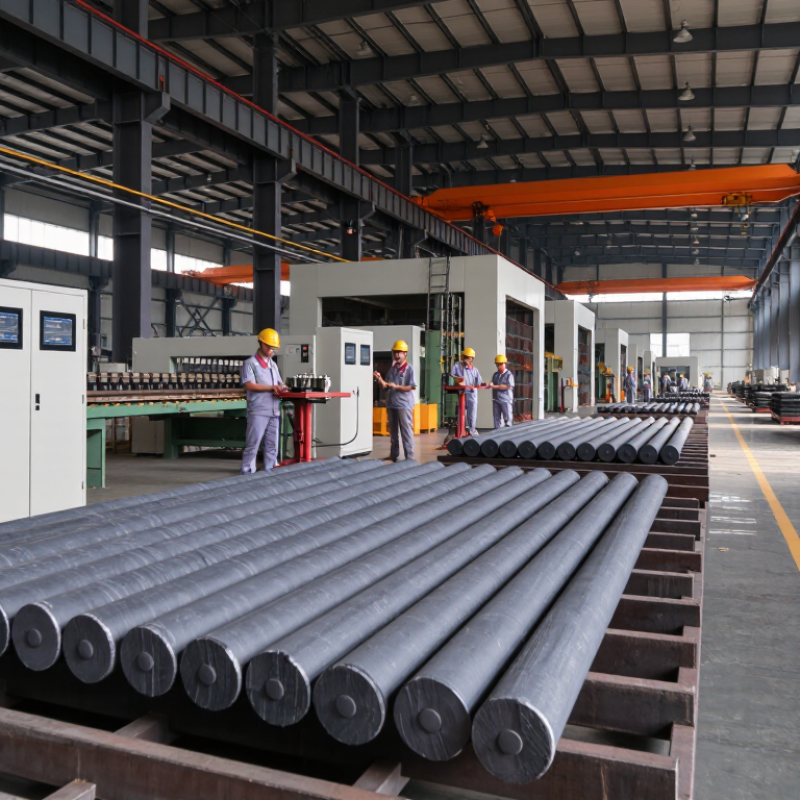
Graphite electrodes are conductive rods used in electric arc furnaces. They carry high current into scrap or direct-reduced iron, creating an intense arc. Their main materials are petroleum needle coke, pitch binder, and graphitized carbon. Ultra-high-power grades generally offer better current capacity and lower resistance. Yet performance depends on furnace design, cooling, operating discipline, and electrode quality.
The World Steel Association reported about 1.89 billion tonnes of crude steel production in 2023. Electric arc furnaces produced roughly 28% of global steel. This route makes electrode reliability increasingly important.
Electrodes also serve ladle furnaces, submerged arc furnaces, and some silicon, phosphorus, and carbide operations. Small changes matter. A loose nipple connection can cause arcing, breakage, and costly downtime.
The USGS Mineral Commodity Summaries 2025 estimated global natural graphite mine production at approximately 1.6 million tonnes in 2024. Natural graphite is not the same as electrode-grade synthetic graphite, but both reflect broader carbon-material supply pressures. Buyers should examine bulk density, electrical resistivity, flexural strength, thermal expansion, and nipple precision. A low purchase price may hide higher consumption. This is where supplier comparisons often become imperfect. Laboratory figures cannot fully predict furnace behavior. Site trials, operating records, and independent inspection remain necessary for a reliable 2026 sourcing decision.
China’s graphite electrode industry is entering 2026 with stronger demand from electric arc furnace steelmaking. Buyers are also watching energy costs, needle coke prices, and export regulations. Large electrodes require stable machining accuracy and consistent thermal performance. Small quality changes can increase electrode consumption during furnace operation.
Experienced procurement teams should examine more than production capacity. They should review resistivity data, bulk density, flexural strength, and shipment records. Factory audits can reveal mixing equipment, graphitization furnace conditions, and inspection procedures. In 2026, reliable suppliers may offer clearer batch traceability and faster technical support. However, price competition could still encourage weaker quality control. This risk deserves attention.
Tips: Request recent test reports and sample electrodes. Compare performance under similar furnace conditions. Confirm packaging, moisture protection, and delivery schedules before signing. Ask how the supplier handles cracked or damaged products. Forecasts are never perfect. Steel demand, power prices, and raw material availability may change quickly. A practical sourcing plan should include backup suppliers, realistic lead times, and regular quality reviews. Supplier rankings can help narrow choices, but actual operating data remains more valuable.
Top 10 Graphite Electrode Suppliers in China for 2026
China’s graphite electrode market remains highly competitive in 2026. The leading ten suppliers are selected through practical indicators, not advertising claims. Their product ranges usually include regular-power, high-power, and ultra-high-power electrodes for electric arc furnaces. Some also supply graphite nipples, which directly affect connection strength and electrode consumption.
A reliable supplier should provide stable bulk density, low electrical resistivity, and controlled thermal expansion. These details matter near a furnace roof, where heat changes quickly. Buyers should inspect raw material sources, machining accuracy, packaging, and delivery records. Traceability is essential. A batch code should connect the electrode to testing data and production records. Certificates based on recognized quality systems can support trust, but they should not replace factory audits.
The strongest candidates often combine large production capacity with technical support. They can recommend electrode diameter, current loading, and joint design for different furnace conditions. Still, capacity alone proves little. A factory may produce quickly yet struggle with consistency between batches. That weakness is easy to miss. Independent sampling, third-party testing, and a small trial order remain sensible steps. I would also compare breakage rates, nipple performance, response time, and export experience before signing a long contract. Prices can change with needle coke and energy costs, so a low quotation may hide future risks.
The chart compares the ten largest anonymized Chinese supplier groups by estimated annual graphite electrode production capacity, measured in thousand metric tonnes. The figures represent capacity estimates compiled from publicly disclosed plant information, industry reports, and company filings; actual output and rankings may vary by year and utilization rate.
China’s ten leading graphite electrode suppliers in 2026 should be assessed through products, capacity, and manufacturing strength. Product portfolios commonly include regular power, high power, and ultra-high power electrodes. Diameters often range from 300 to 800 millimeters. Larger sizes support high-current electric arc furnaces.
Performance depends on more than grade labels. Buyers should check bulk density, electrical resistivity, flexural strength, nipple precision, and oxidation resistance. According to the World Steel Association, global crude steel production reached about 1.88 billion tonnes in 2024. China produced approximately 1.005 billion tonnes, sustaining strong demand from electric arc furnace and ladle furnace operations.
Manufacturing strength begins with needle coke access, controlled forming, baking, impregnation, and graphitization. Plants with multiple graphitization furnaces can offer steadier delivery. However, stated capacity may include theoretical output, not saleable electrodes. That difference matters. The USGS Mineral Commodity Summaries 2025 estimated China’s natural graphite output at about 1.27 million tonnes in 2024. This supports raw-material depth, but natural graphite production does not equal electrode capacity.
A serious supplier profile should record annual output, furnace size, machining lines, laboratory equipment, export experience, and quality certificates. It should also examine sample-test consistency. One shipment can perform well; repeated batches prove manufacturing control. Claims need verification. Audits, production records, and customer references remain more reliable than polished brochures.
Comparative supplier profiles based on publicly reported product ranges, common Chinese manufacturing configurations, and industry capacity bands. Supplier identifiers are anonymized; capacity figures are indicative annual ranges and should be verified during qualification.
| Rank | Anonymous Supplier Profile | Main Product Portfolio | Typical Diameter Range | Indicative Capacity (metric tons/year) | Manufacturing Strengths | Quality and Process Controls | Typical End-Use Markets | Export Readiness |
|---|---|---|---|---|---|---|---|---|
| 1 | Supplier Profile 01 | UHP, HP, and RP graphite electrodes; nipples and graphite electrode accessories | 300–700 mm; selected large-size formats available | 30,000–60,000 | Integrated forming, baking, impregnation, graphitization, machining, and nipple production | High-temperature graphitization, resistivity testing, bulk-density testing, dimensional inspection, and batch traceability | Electric arc furnaces, alloy steel, carbon steel, and specialty steel production | Strong container-loading capability; export documentation and third-party inspection support |
| 2 | Supplier Profile 02 | UHP and HP electrodes, graphite nipples, and custom-machined graphite components | 350–650 mm | 25,000–50,000 | Stable needle-coke blending, automated mixing, long-cycle baking, and precision machining | Controlled raw-material formulation, thermal-expansion testing, flexural-strength testing, and nipple-thread inspection | High-power steelmaking and demanding furnace operating conditions | Regular overseas shipments; suitable for project-based and annual-contract purchasing |
| 3 | Supplier Profile 03 | RP, HP, and selected UHP graphite electrodes with matching connectors | 250–600 mm | 20,000–40,000 | Flexible production scheduling, mixed-grade manufacturing, and competitive medium-size electrode output | Incoming material inspection, controlled baking cycles, resistivity measurement, and final visual inspection | Foundries, ferroalloy furnaces, steel mills, and general EAF operations | Good support for standard export packing, palletization, and mixed-container orders |
| 4 | Supplier Profile 04 | UHP electrodes for high-current furnaces; high-strength nipples and spare accessories | 400–700 mm | 20,000–35,000 | Large-diameter forming, extended graphitization, low-resistivity formulation, and high-current application support | Anisotropy monitoring, thermal-expansion testing, mechanical-property testing, and process-record retention | Large EAFs, ladle furnaces, and high-productivity steelmaking lines | Experienced in technical submittals, sample approval, and customer-specific specifications |
| 5 | Supplier Profile 05 | HP and RP electrodes, graphite blocks, and replacement furnace components | 200–600 mm | 15,000–30,000 | Broad product flexibility, short-run customization, and machining of non-standard dimensions | Dimensional control, density testing, surface-finish inspection, and certificate-of-analysis preparation | Small and medium EAFs, foundries, ferroalloy production, and maintenance procurement | Suitable for distributors and buyers requiring mixed specifications |
| 6 | Supplier Profile 06 | UHP and HP electrodes with impregnated options and precision-machined nipples | 300–600 mm | 15,000–30,000 | Impregnation capability, improved oxidation resistance, and consistent nipple-electrode matching | Impregnant-uptake control, pressure testing, graphitization monitoring, and threaded-joint verification | Continuous EAF operation, specialty steel, and applications requiring reduced consumption | Can support technical documentation, inspection plans, and pre-shipment quality checks |
| 7 | Supplier Profile 07 | RP and HP electrodes, graphite electrode nipples, and furnace repair parts | 200–500 mm | 10,000–25,000 | Cost-efficient production, standardized grades, and responsive production for recurring orders | Batch identification, basic physical-property testing, dimensional checks, and packing inspection | General steelmaking, foundries, mineral processing, and ferroalloy furnaces | Competitive for distributor-led export channels and standard grades |
| 8 | Supplier Profile 08 | HP and UHP electrodes, custom nipples, and graphite machining services | 300–650 mm | 10,000–25,000 | Small-batch customization, CNC machining, tight dimensional tolerances, and product engineering support | Coordinate measurement, thread-gauge inspection, density and resistivity testing, and drawing-based production | Specialty steel, replacement parts, and customers with non-standard technical requirements | Well suited to sample development and customized export orders |
| 9 | Supplier Profile 09 | RP, HP, and selected UHP grades; standard and customized connectors | 250–550 mm | 10,000–20,000 | Efficient standard-grade production, inventory-oriented manufacturing, and quick quotation response | Routine laboratory testing, batch records, visual checks, packing controls, and shipment verification | General EAF steelmaking, foundries, and replacement-electrode distribution | Practical option for standard specifications and repeat spot purchases |
| 10 | Supplier Profile 10 | RP and HP electrodes, small-diameter electrodes, and graphite furnace accessories | 150–500 mm | 5,000–15,000 | Flexible small and medium-size production, rapid customization, and low-volume order support | Material verification, dimensional measurement, resistivity checks, surface inspection, and export packing review | Small EAFs, foundries, ferroalloy plants, laboratories, and maintenance applications | Appropriate for smaller importers, distributors, and trial orders |
Evaluating Chinese graphite electrode suppliers requires more than comparing prices. Start with the electrode grade, diameter, nipple design, and furnace application. Request test data for electrical resistivity, bulk density, flexural strength, and thermal expansion. These figures should match recognized industry standards and your operating conditions. A low price means little if consumption rises during every heat.
From practical sourcing experience, factory verification remains valuable. Check whether the supplier controls graphitization, machining, quality inspection, and packing. Ask for batch numbers, inspection records, production photos, and recent sample results. Visit the facility when possible, or arrange an independent technical audit.
Confirm monthly capacity, realistic lead times, spare production space, and export documentation. Small details matter. Wooden cases should protect threads, while moisture and impact risks need clear handling procedures.
Communication also reveals technical reliability. A capable team should explain why one electrode grade suits your current, power level, and furnace cycle. It should not merely send a catalog. Compare sample performance under similar steelmaking conditions, not only laboratory claims.
Clarify replacement policies, inspection responsibilities, payment terms, and delivery milestones in writing. I have seen neat spreadsheets hide uncertain assumptions. My own evaluations are not flawless, especially when production data is limited. That is why repeated sampling, transparent records, and direct questions remain essential in 2026.