How to Choose the Right Lab Equipment for Your Needs?
Choosing the right lab equipment can be a daunting task. Every lab has unique needs. A well-chosen piece of lab equipment lab can enhance efficiency and accuracy.
Consider what specific tasks you will perform. Different experiments require different tools. For example, centrifuges serve distinct functions compared to spectrophotometers. Knowing your goals can aid in making informed decisions.
Budget constraints often influence choices. High-quality equipment might seem costly. However, investing in reliable tools can save money long-term. Sometimes, cheaper options lead to more problems. Reflecting on the balance between cost and quality is essential for all labs.
Understanding Your Laboratory Requirements
Choosing the right lab equipment starts with understanding your laboratory requirements. Every lab has unique needs.
Consider the type of experiments you will conduct. Analyze the volume of samples and the required precision. These factors directly influence the equipment you'll need.
Tip: Create a list of essential features. This can help clarify your priorities. Are you focusing on speed, accuracy, or capacity? You may find that it's hard to balance all these elements. Sometimes, you have to compromise. Perhaps a slightly lower precision will allow for faster results. Be willing to reflect on what matters most.
Evaluate your workspace as well. How much space do you have? Big equipment requires more room, while smaller models can fit in tighter areas. Keep in mind that safety is crucial. Will the equipment require special safety features? Assess your lab layout carefully. A poorly organized lab can hinder productivity and increase risks. Reassess your needs periodically, as they may change over time.
Identifying Types of Laboratory Equipment
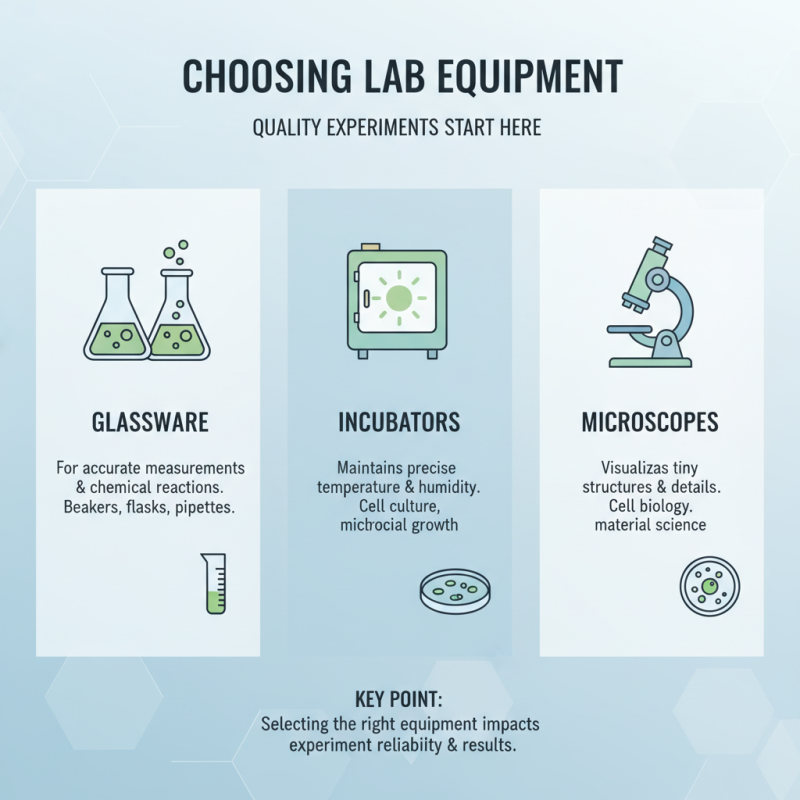
Choosing the right lab equipment starts with understanding the types available. Common equipment includes glassware, incubators, and microscopes. Each serves a specific purpose and can impact your work's quality. For instance, proper glassware is essential for accurate measurements. Incubators help maintain consistent temperatures for sensitive experiments.
Microscopes vary widely in capability. Some are basic, while others are complex. Selecting the right one can feel overwhelming. It's crucial to assess your specific needs first. Are you focusing on microbial studies or cell biology? Your choice should reflect that. Sometimes, you might need to rent equipment before fully committing. This trial period can help clarify your needs, but it’s not always easy to navigate.
Consider your lab space as well. Some equipment may require more room than you initially think. Tight spaces can limit your options. Additionally, there can be hidden costs, such as maintenance and supplies, that you might overlook. Balancing these factors can be tricky, and it's normal to feel unsure. Regular evaluations of your lab setup can help refine your choices over time. Keep striving for improvement.
Assessing Budget Constraints and Cost Effectiveness
When assessing budget constraints for lab equipment, it's essential to establish priorities. Consider which tools are crucial for your experiments. A high-end microscope might be tempting, but assess if a mid-range option meets your needs. Sometimes, lower-cost alternatives can perform adequately without breaking the bank. However, this requires thorough research and honest evaluation of your requirements.
Cost-effectiveness isn't just about the initial price. Look at long-term costs, including maintenance and consumables. Some equipment may seem economical upfront but could incur higher expenses over time. Factor in the durability and lifespan of the equipment as well. A wise investment might require a higher initial outlay. Reflecting on past purchases can inform better decisions. Think about what worked and what didn’t. Could you have saved money by choosing different options?
Each lab has unique financial limitations. Striking a balance between quality and cost is challenging. Some researchers may lean towards the cheapest tools, but this could compromise results. It's a delicate dance between necessity and affordability, requiring regular reevaluation of your choices and priorities.
Evaluating Equipment Quality and Reliability
When evaluating the quality of lab equipment, it's crucial to consider several factors. Look for materials used in construction. They should be durable and resistant to wear. Stainless steel and high-grade plastics are good choices. Ensure that equipment meets safety standards. This protects users and ensures accurate results. Reviews from other users can provide insight into reliability. Don't ignore them.
Testing and calibration options are also vital. Equipment should have easy-to-follow procedures. Regular calibration is necessary for accurate results. Check if the supplier offers support for this process. Training resources can improve proper usage. Sometimes equipment is underutilized due to improper handling.
Make sure you think about the warranty and service options. A good warranty indicates a manufacturer's confidence in their product. However, a short warranty may raise red flags. It's easy to overlook these aspects in the excitement of a new purchase. Take a step back and consider long-term reliability. Reflect on whether the initial investment aligns with future needs. The right equipment can greatly impact research quality and outcomes.
How to Choose the Right Lab Equipment for Your Needs? - Evaluating Equipment Quality and Reliability
| Equipment Type |
Quality Rating (1-5) |
Reliability Rating (1-5) |
Average Cost ($) |
Recommended Use |
| Microscope |
5 |
5 |
1500 |
Biological Research |
| Centrifuge |
4 |
4 |
3000 |
Sample Separation |
| Pipette |
5 |
5 |
150 |
Liquid Handling |
| Fume Hood |
4 |
5 |
5000 |
Chemical Handling |
| Spectrophotometer |
5 |
4 |
2000 |
Quantitative Analysis |
Researching Vendor and Manufacturer Reputation
When choosing lab equipment, vendor and manufacturer reputation is crucial. A well-regarded vendor often provides reliable products. Check for certifications and industry standards. These indicators can help ensure the quality of the equipment. Reviews and testimonials from other lab professionals can reveal valuable insights. Don’t ignore these firsthand experiences—they often tell a more complete story.
It’s also important to reconsider your needs and not just follow trends. Sometimes, a popular product may not be suitable for your specific requirements. This is where understanding the vendor's track record becomes vital. Look into their history with customer service and support. It's essential to assess how they handle issues like equipment failures or malfunctions. Transparency in communication can be a significant factor.
Explore forums and professional networks to gather opinions. However, remember that not all reviews are objective. Some might be biased or unrepresentative. Engaging with the community can provide a more nuanced perspective. Be cautious about slipshod evaluations, as they may misguide you. Balancing expert advice with your lab's unique needs is key to making an informed choice.