How to Choose the Right Scientific Lab Equipment for Your Research Needs?
Choosing the right Scientific Lab Equipment is critical for successful research. According to a report by MarketsandMarkets, the global laboratory equipment market is projected to reach $60 billion by 2026. This growth underscores the importance of reliable equipment in advancing scientific discoveries.
However, many researchers often find themselves overwhelmed by options. Each piece of equipment varies in function, accuracy, and cost. A study by Research and Markets highlighted that 45% of researchers believe poor equipment choice hinders their progress. Investing in the wrong Scientific Lab Equipment can lead to wasted time and resources.
Understanding the specific needs of your research is essential. It is not just about purchasing the latest model. Selecting equipment requires careful consideration of budget, reliability, and user-friendliness. Without a clear strategy, you may end up with tools that do not meet your requirements. Balancing these factors is crucial for achieving accurate and replicable results.

Evaluating the Specific Requirements of Your Research Project
When choosing scientific lab equipment, it's crucial to evaluate the specific requirements of your research project. Start by clearly defining your research goals. What are the key experiments? What data do you need to collect? Understanding these details helps narrow down your options.
Consider the scale of your experiments. Will you conduct large-scale tests or small, focused studies? Each scenario demands different equipment capabilities. Think about the precision required as well. Some projects may allow for rough measurements, while others need high accuracy. Reflecting on these aspects can guide your decisions.
Additionally, budget constraints often complicate choices. Sometimes, more affordable options require sacrifices in quality or features. It’s essential to weigh the benefits against potential drawbacks. You may find the perfect piece of equipment, but it might exceed your budget. This challenge invites you to innovate. Seeking alternatives could reveal unexpected solutions that fit both your needs and your financial limits.
How to Choose the Right Scientific Lab Equipment for Your Research Needs?
| Equipment Type |
Key Features |
Research Applications |
Budget Range (in USD) |
| Spectrophotometer |
Wide wavelength range, high sensitivity |
Biochemical analysis, DNA quantification |
$1,000 - $5,000 |
| Centrifuge |
Variable speed control, multiple rotor options |
Cell separation, protein purification |
$2,000 - $10,000 |
| PCR Machine |
Fast thermal cycling, user-friendly interface |
Genetic research, cloning |
$1,500 - $7,000 |
| Microscope |
High-resolution imaging, adjustable magnification |
Cell biology, materials science |
$500 - $20,000 |
| Incubator |
Temperature and humidity control, CO2 regulation |
Cell culture, microbial studies |
$1,000 - $8,000 |
Identifying Essential Types of Scientific Lab Equipment
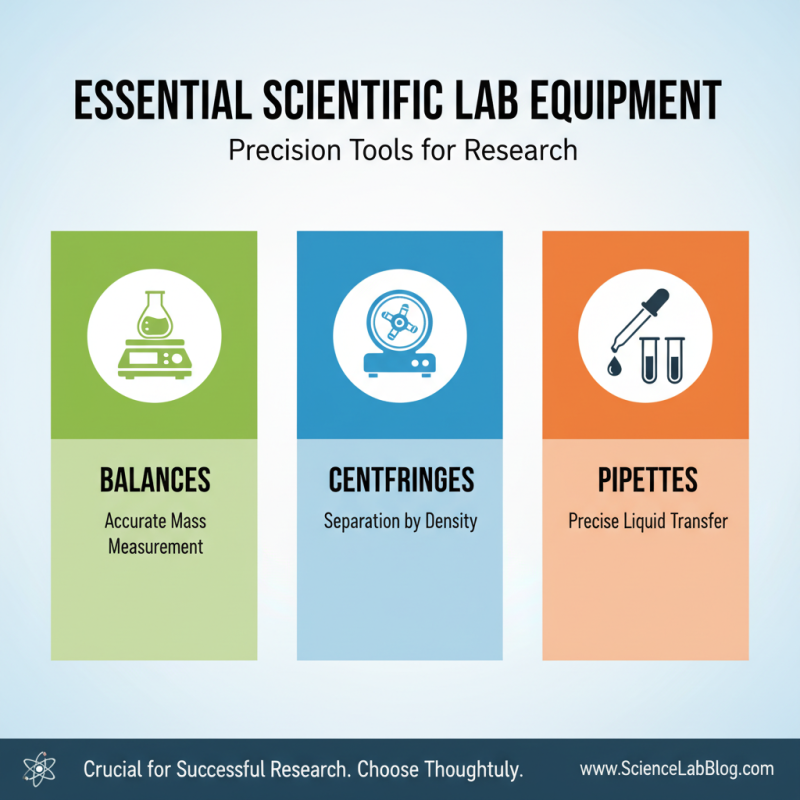
Choosing the right scientific lab equipment is crucial for successful research. Essential types include balances, centrifuges, and pipettes. Balances are vital for measuring mass accurately. Centrifuges separate components based on density. Pipettes are essential for transferring precise liquid volumes. Each piece serves a unique purpose, and selecting them requires thoughtful consideration.
Understanding your research needs helps in equipment selection. If your work involves molecular biology, a PCR machine might be necessary. For chemistry experiments, fume hoods could offer safety and ventilation. It’s easy to overlook specific requirements. Budget constraints can lead to compromises. Researching different equipment options may feel overwhelming. The right choice impacts experimental outcomes directly.
Additionally, training on equipment use is important. Improper handling can skew results or damage instruments. Trial and error is part of the process. Regular maintenance ensures accuracy and longevity. Reflecting on past equipment choices can foster growth. Mistakes often lead to better decision-making in the future.
Assessing Quality Standards and Certifications for Lab Equipment
When selecting scientific lab equipment, assessing quality standards is crucial. Equipment should meet specific criteria to ensure reliability and accuracy. Look for certifications from recognized organizations. These certifications indicate that the equipment has undergone rigorous testing. A piece of equipment might look impressive, but its certification is what truly matters. It reflects its competency in various research applications.
Quality assurance should never be overlooked. Equipment may pass initial inspections yet fail later in use. This can lead to flawed results. Research requires precision, and any error can impact findings. Evaluate the maintenance history of the equipment as well. Older models might have unforeseen issues that newer models do not. Be cautious when choosing used equipment. Sometimes, cost-saving decisions lead to future regrets.
Documentation is essential when making equipment choices. Ensure you have access to user manuals, maintenance logs, and service histories. Required tests should always accompany equipment usage. Even with certifications, human error can play a role. It’s important to double-check and regularly calibrate instruments. The complexity of scientific research demands high standards. Compromising on quality is a risk that can jeopardize the integrity of your research.
Understanding Budget Constraints and Cost-Effectiveness in Selection
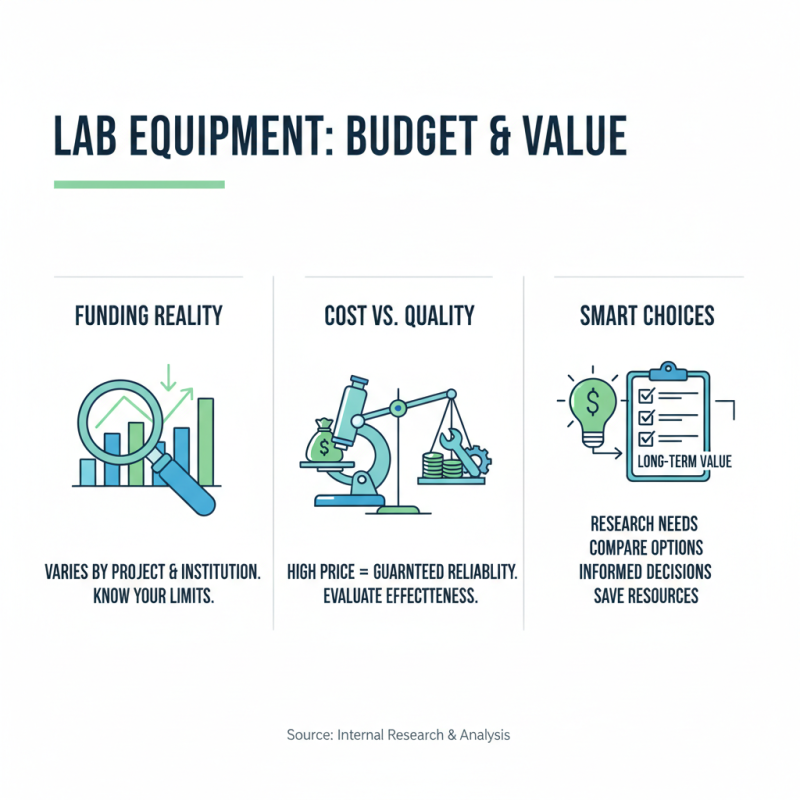
When selecting scientific lab equipment, budget constraints play a crucial role. Research funding varies significantly between projects and institutions. Understanding your financial limitations will help you make informed decisions. High-quality equipment often comes with a high price tag, but that does not always guarantee reliability. It's necessary to evaluate whether the more expensive options are genuinely more effective.
Cost-effectiveness should be a priority. Cheaper equipment can sometimes meet research needs without compromising results. Look for versatile tools that serve multiple purposes. They can save you money in the long run. However, it is essential to balance cost and quality. Some affordable options may lack durability. You might face unexpected expenses down the line if equipment fails or needs frequent repairs.
Reflect on the long-term implications of your choices. Assess the total cost of ownership, not just the initial price. Maintenance, calibration, and replacement parts can add up. It's also wise to consider the extent of your usage. If a particular piece of equipment will be underutilized, re-evaluate its necessity. Think pragmatically about immediate needs and future projects.
Exploring Supplier Reputation and After-Sales Services in Equipment Choices
Choosing the right lab equipment goes beyond functionality. Supplier reputation is crucial. A reputable supplier ensures quality and reliability. When exploring options, check reviews and testimonials from other researchers. Their experiences can be enlightening.
Here's a tip: Ask for recommendations from colleagues. Personal experiences can often guide you better than online reviews. A supplier’s track record with customer service matters a lot. After-sales service can make or break your experience.
Another key point is to evaluate the support offered by the supplier. Is technical support readily available? Can they assist with troubleshooting? Assess warranties and potential repairs. Equipment can fail unexpectedly. You want a supplier that responds quickly.
Reflect on your own experiences with suppliers. Have you faced challenges? Did prompt support help resolve issues? This can influence your decision greatly. Remember, a great product is only as good as the support behind it. Choose wisely.