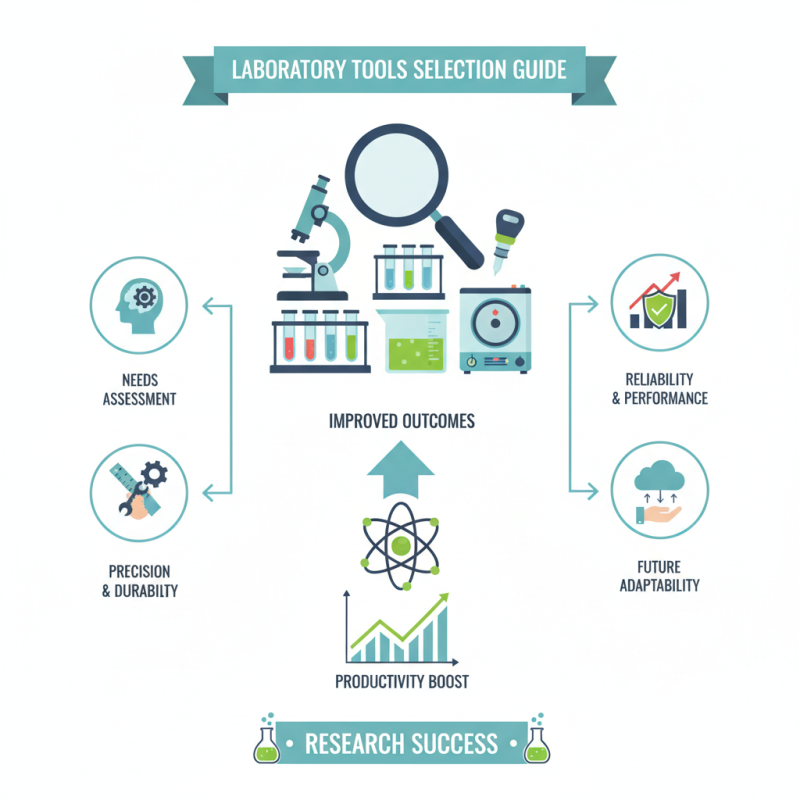
Choosing the right laboratory tools is crucial for achieving accurate and efficient results in any research environment. According to a recent report by Grand View Research, the global laboratory tools market is projected to reach $50 billion by 2026, highlighting the demand for advanced equipment. Selecting appropriate laboratory tools can significantly impact productivity and outcomes in research settings.
Dr. Emily Carter, a leading expert in laboratory technology, states, "The right tools can make or break an experiment." This underscores the importance of aligning tools with specific needs. Factors such as precision, durability, and ease of use should guide your choices. The tools must not only fit your current requirements but also be adaptable for future experiments.
While many researchers focus on cost, overlooking quality can lead to errors. A study by the National Institutes of Health found that 30% of laboratory failures were attributed to improper equipment. Finding the best laboratory tools is not just about price, but also about reliability and performance. Thus, careful consideration is essential to ensure that what you choose meets both your immediate and long-term research goals.
Choosing the right laboratory tools requires a clear understanding of your specific needs and objectives. Start by assessing the types of experiments or analyses you conduct. Consider the samples you'll work with, as this directly influences the tools required. Different experiments demand different precision levels and capabilities.
When evaluating tools, reflect on user-friendliness. Complex equipment might offer advanced features, but they can complicate your workflow. It’s essential to find a balance between sophistication and usability.
Tips: Keep a checklist of must-have features for your laboratory tools. Prioritize attributes like durability and maintenance ease. Don't hesitate to consult with colleagues or industry experts for insights. Their experiences can guide you to make informed decisions. Also, think about future applications. Selecting versatile tools can save costs in the long run. This foresight can prevent unnecessary purchases later.
| Tool Type | Purpose | Key Features | Typical Applications | Considerations |
|---|---|---|---|---|
| Microscope | Visual examination of samples | Magnification, resolution, lighting type | Biological studies, materials analysis | Sample size, budget, usage frequency |
| Pipette | Liquid transfer with precision | Volume range, accuracy, ergonomic design | Chemical assays, biological testing | Calibration requirements, ease of use |
| Centrifuge | Separation of substances based on density | Speed, capacity, rotor types | Cell biology, blood separation | Space requirements, energy consumption |
| Spectrophotometer | Measurement of light absorption | Wavelength range, detector type, software | Concentration analysis, reaction kinetics | Calibration, maintenance needs |
| pH Meter | Measurement of acidity or alkalinity | Calibration, measurement range, display type | Water quality testing, chemical processes | Sensor durability, battery life |

When selecting laboratory tools, understanding their specific functions is essential. Common tools include
pipettes, beakers, and centrifuges, each serving distinct purposes.
Pipettes are used for transferring precise volumes of liquids. They come in
various types, such as manual and electronic, allowing flexibility based on your needs.
Beakers, on the other hand, are ideal for mixing and heating substances. They provide a simple way to observe reactions.
Centrifuges separate liquids from solids using high-speed rotation. Their effectiveness is crucial in many experiments,
especially in biology and chemistry labs. Not all centrifuges fit every laboratory, and
capacity is often a key consideration. It's important to recognize the
limitations of each tool. For example, beakers don't provide precise measurements. Relying solely on them may lead to
errors.
In addition to these tools, balances measure mass accurately. Different types, like analytical balances,
offer precision for smaller samples. Understanding potential sources of error is crucial when using these tools.
Moreover, investing time in training can significantly enhance efficiency.
Consider the specific requirements and limitations of your lab
before choosing tools. Each choice impacts experimental outcomes and data integrity.
Selecting the right laboratory tools is crucial for efficiency and accuracy in research. One key factor to consider is the specific application. For example, tools meant for molecular biology differ greatly from those for analytical chemistry. According to a 2022 report by the International Laboratory Equipment Association, nearly 30% of laboratories reported issues stemming from improper tool selection. These gaps can lead to unexpected results or wasted resources.
Another essential aspect is the tool's compatibility with existing equipment. This is especially true for software interfaces and data collection methods. Poor integration can disrupt workflows. In a survey by the Lab Managers Association, 25% of respondents identified integration issues as significant challenges. Ensuring seamless communication between tools enhances productivity and reduces errors.
Budget constraints cannot be ignored. However, investing in quality tools can yield long-term savings. According to a 2023 study by Research and Markets, laboratories that prioritized high-quality equipment saw a 40% increase in efficiency. Nonetheless, it’s vital to strike a balance between cost and quality. A tool that appears economical in the short term may result in unexpected maintenance costs and downtime. Each choice demands careful reflection to achieve optimal outcomes.
When evaluating the quality and reliability of laboratory equipment, users should prioritize precision and durability. A recent survey indicated that 72% of laboratory managers believe equipment downtime significantly impacts productivity. Thus, selecting reliable tools can prevent disruptions.
Material quality is essential. For example, stainless steel and high-grade plastics are often more durable. They resist corrosion and wear over time, which ensures longevity.
According to the International Laboratory Equipment Association, devices made from these materials show a 30% longer lifespan than those made from lower-quality alternatives.
Proper certifications also signify reliability. Equipment with ISO certification meets international quality standards. However, not all manufacturers pursue this route. Users should verify certifications to avoid potential pitfalls. Failure to do so can lead to unexpected failures. In addition, exploring user reviews offers insights into real-world performance.
These experiences, especially negative ones, can guide purchasing decisions. Balancing these factors requires thorough research, yet many overlook this step. Engaging with industry experts can further enhance understanding.
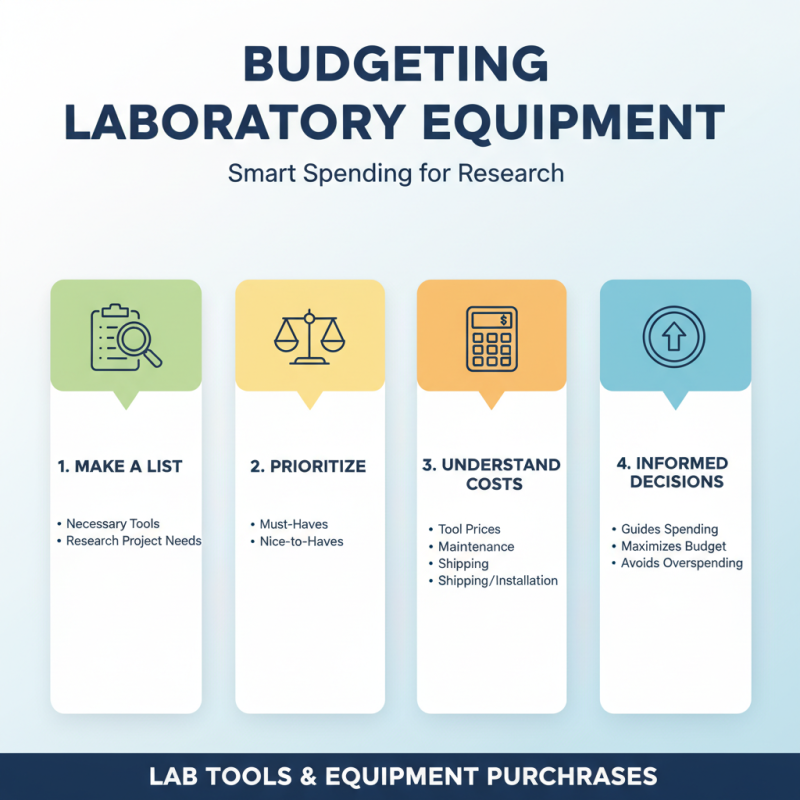
Budgeting for laboratory tools and equipment is crucial for any research project. Understanding the costs involved helps in making informed decisions. Begin with a list of necessary tools. Prioritize must-haves versus nice-to-haves. This clarity will guide your spending.
Research costs thoroughly. Online resources and industry reports can offer insights. However, prices may vary widely. Some suppliers might charge more for convenience or name recognition. It’s important to compare several options carefully. Cheap tools initially may lead to higher costs later due to frequent replacements.
Consider both new and used equipment. Used tools can perform well if vetted properly. Look for certified reconditioning options. This reduces costs without sacrificing quality. Take time to reflect on your choices. Mistakes in budgeting can lead to delays and frustrations later. Always keep an eye on total expenses, including maintenance and supplies.