How to Choose the Best Infrared Thermometer?
Choosing the best Infrared Thermometer starts with understanding how temperature readings are actually made. These devices detect emitted infrared energy from a surface, rather than touching the object directly. That sounds simple, but materials, distance, moisture, and surface finish can change the result. A shiny metal pipe may display a different reading from a dull painted wall at the same temperature.
Real working conditions matter.
A reliable choice should match the intended application. Kitchen users may need a fast model with a broad temperature range and easy cleaning. HVAC technicians often require adjustable emissivity, a clear display, and a suitable distance-to-spot ratio. Workshop professionals may value data logging, alarms, or compatibility with contact probes. Checking the manufacturer’s specifications is essential, especially for accuracy, calibration guidance, response time, and operating limits.
Do not trust every reading immediately.
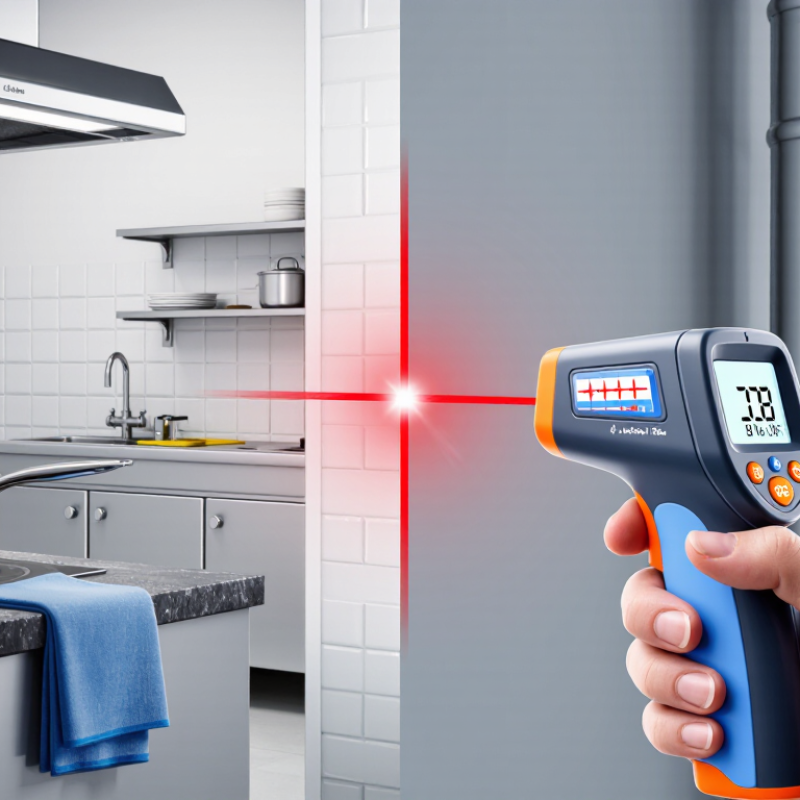
Experienced users compare infrared measurements with a known reference when accuracy matters. They also keep the lens clean, avoid measuring through glass, and hold the instrument at a consistent distance. A built-in laser helps aim, but it does not measure temperature itself. This distinction is easy to overlook.
Even a high-quality instrument can produce misleading results when used incorrectly. That is an uncomfortable limitation, but an important one. Independent reviews, laboratory evidence, warranty terms, and calibration support can reveal whether a product deserves professional trust. The best Infrared Thermometer is not necessarily the most expensive model. It is the one that provides dependable readings for the surfaces, temperatures, and working habits involved.
Define the Measurement Needs and Intended Use
Choosing an infrared thermometer starts with the measurement, not the feature list. Decide whether you need human body temperature, food checks, machinery inspection, or surface screening. Each task demands different accuracy, distance, emissivity, and temperature ranges. The U.S. Food and Drug Administration’s guidance for non-contact thermometers recommends controlled conditions, including an ambient range of 16–40°C. Outdoor sunlight, airflow, sweat, and recently washed skin can distort readings. Small details matter.
For clinical use, check whether the device follows ISO 80601-2-56 or ASTM E1965 requirements. These standards address medical thermometer performance and testing conditions. For industrial surfaces, emissivity adjustment is essential. Human skin is usually near 0.98 emissivity, while polished metal can be far lower. A fixed setting may create a convincing but incorrect number. It happens.
Define the target surface, expected range, reading distance, and acceptable error before purchasing. A workshop may need a broad range and adjustable emissivity. A caregiver may need fast readings, clear fever indicators, and repeatable forehead measurements. The National Institute of Standards and Technology emphasizes traceable calibration and uncertainty when reliable temperature data supports technical decisions. Ask for calibration evidence, not only advertised precision. I once assumed more decimal places meant better accuracy. That assumption was wrong. Test the thermometer against a known reference, record environmental conditions, and compare repeated readings from the same location.
Compare Infrared Thermometer Types and Measurement Ranges
How to Choose the Best Infrared Thermometer?
Infrared thermometers measure surface temperature without physical contact. Their usefulness depends on the thermometer type and measurement range. A forehead model is designed for human skin, usually around 32°C to 43°C. It offers quick readings but can be affected by sweat, hair, sunlight, or a cold room. Let the device and subject adjust to the same environment before testing.
Industrial handheld models cover a wider range, often from about -50°C to 550°C. Some high-temperature models extend beyond 1,000°C. That wider range does not guarantee better accuracy. Check the stated accuracy at your target temperature. A device built for ovens may perform poorly on skin.
Distance matters too. A 12:1 distance-to-spot ratio measures a 1-centimeter area from 12 centimeters away. Choose a higher ratio for small targets. Fixed-emissivity models are simple, while adjustable models handle materials more reliably. Dark, matte surfaces usually give steadier readings than shiny metal, glass, or wet objects. Reflective surfaces can return surrounding heat instead of their own.
I once measured a metal pipe from too far away. The reading seemed reasonable, but it included the cooler wall behind it. That mistake changed my selection criteria. I now match the range, spot size, emissivity setting, and working distance before comparing models. Repeat the measurement. Small differences can reveal poor positioning, airflow, or an unsuitable thermometer.
How to Choose the Best Infrared Thermometer?
Infrared thermometer selection depends mainly on the target application and required temperature range. Medical models are optimized for a narrow body-temperature range, while food, general-purpose industrial, and high-temperature models cover progressively wider ranges. The values shown are representative application ranges; always confirm the product specification, accuracy, emissivity settings, and measurement distance before purchase.
Evaluate Accuracy, Emissivity, and Environmental Performance
How to Choose the Best Infrared Thermometer?
Evaluate Accuracy, Emissivity, and Environmental Performance
A reliable infrared thermometer begins with verified accuracy, not a low price or a bright display. Look for a calibration certificate linked to a recognized measurement system. Check the stated accuracy across the temperatures you actually measure. A device accurate at room temperature may perform differently near hot machinery or frozen surfaces. In field inspections, I compare readings with a calibrated contact probe whenever practical. My results do not always match perfectly. That difference deserves investigation.
Emissivity is equally important. Most painted, matte, and organic surfaces have relatively high emissivity. Polished metal, glass, and glossy plastic can reflect nearby heat sources and produce misleading readings. Choose a thermometer with adjustable emissivity. Clean the target area, avoid direct sunlight, and measure straight on. Keep the recommended distance-to-spot ratio in mind. A small target can be easily overwhelmed by the surrounding surface. That mistake is common.
Environmental performance often decides whether a tool remains dependable. Check its operating temperature, humidity limits, response time, and protection against dust or moisture. Condensation can distort readings after moving between cold storage and a warm room. Allow the instrument to stabilize first. Strong airflow, steam, and reflective backgrounds also deserve attention. I once treated an unstable reading as equipment failure, but the real problem was surface reflection. Practical testing under expected conditions is more convincing than specifications alone. Still, even careful users can overlook changing ambient temperatures.
Check Usability, Safety Features, and Maintenance Requirements
Choosing an infrared thermometer starts with usability, not advertised range.
A clear display, one-button operation, and a visible measurement indicator reduce mistakes in busy rooms. The U.S. Food and Drug Administration notes that distance, forehead position, sweat, and room conditions can affect readings. I would test the device on several people before relying on it. Small screens are easy to underestimate.
Safety features deserve equal attention. Select a model with an automatic shutoff, low-battery warning, and a measurement history function. For clinical use, check compliance with ISO 80601-2-56, which defines requirements for clinical thermometers.
The Centers for Disease Control and Prevention identifies 100.4°F (38°C) as a common fever threshold, but one reading should not determine treatment. Look for Celsius and Fahrenheit switching, especially in shared workplaces. Avoid touching the sensor to skin unless the instructions specifically allow it.
Maintenance is often ignored. It should not be.
The FDA advises keeping the sensing area clean and following the manufacturer’s cleaning instructions. Use a soft, slightly dampened cloth, and never immerse the device. Store it away from direct sunlight, heaters, and cold vehicles. Check accuracy against a reference thermometer periodically, although this comparison is imperfect. Battery condition also matters; weak batteries can produce unstable results. Record unusual readings, room temperature, and measurement distance during routine checks. That simple log can reveal user error before it becomes a health decision.
Match the Thermometer’s Specifications to Your Budget and Application
Choosing the best infrared thermometer starts with the application, not the advertised price. A kitchen user may need a moderate temperature range, quick readings, and easy cleaning. An HVAC technician may need better accuracy, a narrow measurement area, and a strong distance-to-spot ratio. Buying the widest range can look sensible, but it may add cost without improving daily work.
Check accuracy at the temperatures you actually measure. A device rated for extreme heat may perform less precisely near room temperature. Emissivity adjustment matters when measuring shiny metal, painted surfaces, or reflective materials. Without the correct setting, the display can look convincing and still be wrong. I learned this after comparing a reading on polished steel with a contact probe. The infrared reading was several degrees different.
Budget should also include calibration checks, protective cases, and replacement batteries. For occasional home inspections, basic models may be practical. For maintenance records or quality control, choose documented accuracy, stable calibration, and a readable display in poor lighting. Response time matters near moving machinery or changing surfaces. So does the laser, but it only shows aiming direction. It does not define the measured area. I still prefer testing a thermometer against a trusted reference before relying on it. Specifications help narrow the choice. Real working conditions make the final decision.
