Sourcing Laboratory Consumables globally is more than comparing prices on supplier websites. A reliable process connects product quality, supplier capability, shipping conditions, and regulatory expectations. A box of sterile pipette tips may look ordinary, yet its lot number, packaging seal, and storage history can affect daily laboratory work.
Experienced procurement teams usually begin with a precise specification. They confirm material, volume range, sterility level, chemical resistance, packaging quantity, and intended application. Supplier evaluation should include quality certifications, manufacturing controls, customer references, and documented traceability. A certificate alone is not enough. The details matter.
Small details matter.
Global purchasing also requires careful logistics planning. Temperature-sensitive reagents may need validated cold-chain transport, while fragile plasticware needs protective packaging. Import documentation, labeling, customs requirements, and delivery lead times should be checked before placing an order. Requirements vary by destination and product type. Qualified suppliers should provide clear technical documents and responsive support.
However, no sourcing plan is perfect. A supplier may pass an audit but still struggle during a sudden demand increase. A low quotation may hide higher freight costs, inconsistent batches, or difficult returns. These risks deserve honest review. Buyers should test samples, record performance, and maintain approved alternatives when practical. This article explains how to compare global suppliers, verify product quality, manage logistics, and build a dependable purchasing process without sacrificing laboratory safety or operational continuity.
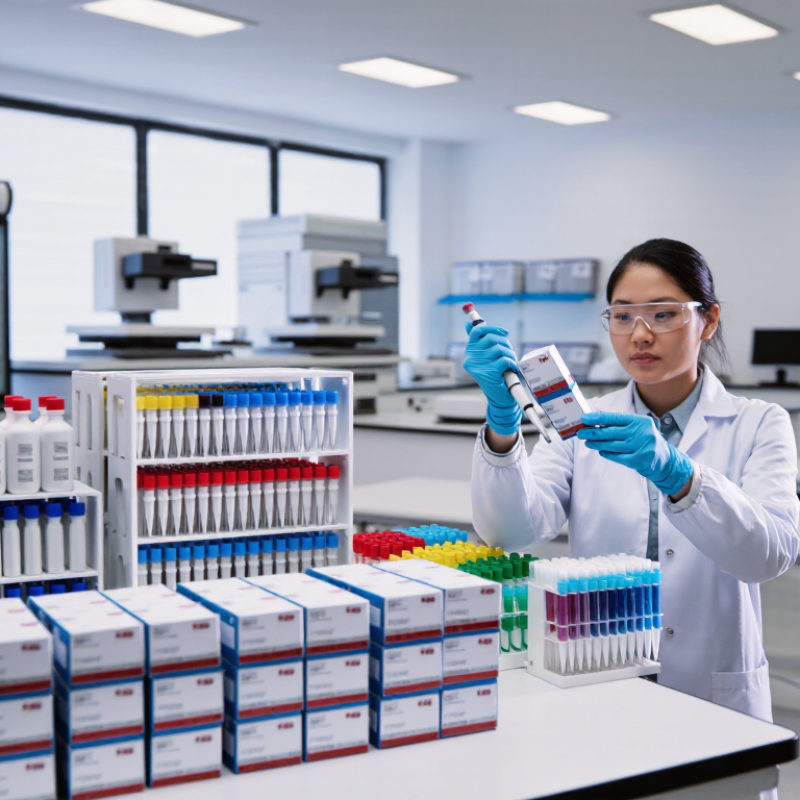
Laboratory consumables are the routine items a laboratory uses, replaces, or discards during testing. They include pipette tips, tubes, gloves, filters, slides, swabs, culture plates, and sample containers. They are not interchangeable by default. Material quality, sterility, chemical resistance, volume accuracy, and packaging can affect results.
Global sourcing requirements should begin with the test method, not the lowest quotation. Grand View Research estimated the global laboratory supplies market at about USD 40 billion in 2023, with continued growth through 2030. That scale creates choice, but also inconsistency. A reliable specification should state dimensions, material grade, tolerance, sterility level, shelf life, lot traceability, and required certificates. ISO 15189:2022 emphasizes documented competence and traceable laboratory processes. Consumables must fit those controls.
A practical sourcing file should compare at least three suppliers across quality, lead time, customs readiness, and backup capacity. Keep retained samples where appropriate. Check carton labels before opening every shipment. Temperature-sensitive items may need monitored transport, while sterile products require intact seals and clear expiry dates. The WHO Laboratory Quality Management System handbook stresses purchasing controls and supplier evaluation. That sounds simple. It is not always simple.
A common mistake is treating compliance documents as proof of consistent performance. They are only evidence. Incoming inspection, lot records, and periodic testing still matter. Forecasting should include demand spikes, port delays, and rejected batches. Perfect continuity is unrealistic; resilient sourcing plans should admit that weakness.
How to Source Laboratory Consumables Globally?
Evaluating international suppliers requires more than comparing prices. Start by checking their quality management system, production history, and export experience. ISO 9001 certification can indicate controlled processes, but it does not guarantee every product will perform well. Ask for recent certificates of analysis, batch numbers, expiry dates, and storage conditions. For critical measurements, request test reports from laboratories accredited to ISO/IEC 17025. Confirm that reported methods match your intended application.
Inspect the product details closely. A box of pipette tips should show lot information, material type, sterility status, and packaging integrity. For reagents, review concentration, impurity limits, temperature requirements, and transport controls. Request samples before placing a large order. Test them under real laboratory conditions. A supplier may provide excellent documents, yet inconsistent fit or unclear labeling can still cause delays. This is where evaluation becomes less tidy than expected.
Tips: Compare at least three suppliers. Contact their quality team directly. Ask how they handle complaints and recalls. Check whether replacement products keep the same specifications. Keep written records of every answer. Do not rely on polished websites. I have found that response speed matters, but it is not proof of technical competence. Recheck certificates through issuing bodies when possible. Review performance again after delivery, because one successful shipment may not reveal long-term quality issues.
Global sourcing laboratory consumables requires more than comparing unit prices. A low quotation can hide freight, customs handling, inspection fees, and temperature-controlled storage. I have found that a spreadsheet becomes useful only when every cost has a clear owner and payment date. Request tiered quotations, minimum order quantities, lead times, and currency terms. Then calculate landed cost per usable item, not per carton. Small details matter. A damaged box can erase a discount.
Certification checks should match the product’s intended use and destination market. Ask for current certificates, test reports, lot traceability, shelf-life data, and declarations of conformity. Verify that documents identify the actual manufacturing site and product specification. Do not accept a certificate copied from an unrelated product family. That mistake is easy. It is also expensive. Procurement teams should compare batch consistency, packaging integrity, and replacement procedures, not just document counts. When possible, order samples and record performance under normal laboratory conditions. One successful sample does not prove stable supply.
Total procurement cost also includes quality failures, delayed experiments, staff time, and emergency purchases. Compare payment terms with cash-flow needs and forecast demand conservatively. Longer contracts may reduce prices, but they can increase obsolete inventory. I once underestimated storage limits during a demand spike; the “cheapest” option became awkward and costly. Build a review point before committing. Keep two qualified sources where risk justifies it, while avoiding needless complexity. Reliable sourcing requires a measured balance between price, evidence, and practical control.
| Consumable and Specification | Typical Sourcing Region | Indicative Unit Price (USD) |
Typical Compliance Documents to Request | Estimated Freight, Duty, and Inspection Cost | Typical Lead Time | Estimated Landed Cost (USD) |
Procurement Considerations |
|---|---|---|---|---|---|---|---|
|
Nitrile examination gloves Powder-free, 100 gloves per box |
East or Southeast Asia | $3.80–$6.20 / box | ISO 13485 quality-management evidence; EN 455 test reports where medical use applies; ASTM D6319 test data; certificate of analysis; powder-free and protein-residue declarations. | $0.70–$1.50 per box | 30–60 days | $4.50–$7.70 / box | Check AQL level, chemical resistance, pinhole performance, expiry date, carton dimensions, and container loading efficiency. Medical-use claims may require additional national registration. |
|
Sterile polypropylene pipette tips 10 µL, filtered, rack of 96 |
East Asia or Central Europe | $4.50–$9.00 / rack | ISO 8655-related performance data; sterility validation; endotoxin statement where relevant; RNase/DNase-free declaration; lot-specific certificate of analysis; material declaration for polypropylene and filter media. | $0.90–$2.00 per rack | 25–55 days | $5.40–$11.00 / rack | Compare fit with the intended pipette system, liquid-retention data, aerosol-barrier performance, rack recyclability, and lot-to-lot dimensional consistency. |
|
Sterile serological pipettes 10 mL, individually wrapped, case of 200 |
East or Southeast Asia | $0.18–$0.42 / piece | ISO 13485 evidence; ISO 11137 or ISO 17665 sterilization validation, as applicable; accuracy and graduation test report; endotoxin and pyrogen statement; certificate of analysis. | $0.05–$0.14 per piece | 30–65 days | $0.23–$0.56 / piece | Freight is strongly affected by carton volume. Confirm packaging integrity, sterility shelf life, negative graduation tolerance, and whether the product is intended for research or clinical use. |
|
Microcentrifuge tubes 1.5 mL, sterile, bag of 500 |
East Asia, Eastern Europe, or North America | $0.045–$0.11 / tube | ISO 11137 or ISO 17665 sterilization evidence where applicable; RNase/DNase-free statement; endotoxin information; temperature-resistance data; certificate of analysis; resin identification. | $0.012–$0.035 per tube | 20–50 days | $0.057–$0.145 / tube | Compare maximum RCF, cap-lock reliability, evaporation performance, low-binding options, and compatibility with freezing temperatures. Sterile and non-sterile versions have materially different prices. |
|
Cell-culture flasks T-75, treated, sterile, case of 10 |
Europe, North America, or East Asia | $2.20–$5.50 / flask | ISO 13485 evidence where applicable; USP Class VI or equivalent biocompatibility information for relevant materials; sterility validation; surface-treatment data; endotoxin and cytotoxicity statements; lot certificate. | $0.70–$1.80 per flask | 25–70 days | $2.90–$7.30 / flask | Surface treatment, optical clarity, vented-cap design, closure integrity, and packaging volume are major cost drivers. Request cell-attachment and growth-performance data for critical applications. |
|
Glass laboratory bottles 500 mL, borosilicate glass, screw cap |
Europe, East Asia, or South Asia | $1.80–$4.80 / bottle | ISO 3585 or equivalent borosilicate-glass specification; dimensional inspection report; thermal-shock information; closure material declaration; leachables or extractables data where required. | $0.55–$1.60 per bottle | 20–55 days | $2.35–$6.40 / bottle | Glass breakage, protective packaging, pallet utilization, and insurance can exceed the basic freight rate. Confirm cap liner compatibility and autoclave suitability. |
|
Syringe filters 25 mm, 0.22 µm, PES membrane, pack of 100 |
East Asia, Europe, or North America | $0.35–$1.10 / unit | Membrane-material certificate; pore-size validation; extractables data; bacterial-retention or integrity-test data; ISO 11137 sterilization evidence if sterile; lot-specific certificate of analysis. | $0.10–$0.32 per unit | 25–60 days | $0.45–$1.42 / unit | Compare throughput, pressure limit, hold-up volume, chemical compatibility, and actual membrane area. Sterile packaging and low-volume orders significantly increase landed cost. |
|
PCR plates 96-well, low-profile, skirted, pack of 25 |
East Asia, Europe, or North America | $1.40–$3.80 / plate | ISO 8655-related dimensional information; RNase/DNase-free declaration; optical-clarity data for qPCR; thermal-cycler compatibility list; material declaration; lot certificate. | $0.35–$0.95 per plate | 20–50 days | $1.75–$4.75 / plate | Confirm well uniformity, sealing compatibility, barcode options, fluorescence background, and resistance to deformation during thermal cycling. |
|
Cryogenic storage vials 2 mL, external thread, sterile, bag of 100 |
East Asia, Europe, or North America | $0.28–$0.85 / vial | Material and temperature-range declaration; sterility validation; leak-test report; endotoxin information; cytotoxicity or biocompatibility data where relevant; certificate of analysis. | $0.08–$0.25 per vial | 25–60 days | $0.36–$1.10 / vial | Verify storage temperature, cap and gasket material, vapor-phase liquid-nitrogen suitability, barcode durability, and resistance to repeated handling. |
|
Disposable laboratory coats Polypropylene, medium weight, single-use |
East or Southeast Asia | $0.70–$2.20 / piece | EN 14126 or equivalent protection data only when biological-protection claims are made; ISO 13688 garment information; material composition; seam and tear-strength test report; certificate of conformity. | $0.20–$0.65 per piece | 25–55 days | $0.90–$2.85 / piece | Do not treat a basic disposable coat as a certified protective garment unless the relevant claim and test reports are provided. Compare size grading, cuff construction, packaging, and disposal requirements. |
|
Absorbent bench liners 45 cm × 50 cm, disposable, pack of 100 |
East Asia, Europe, or North America | $0.12–$0.38 / sheet | Fiber and backing-material declaration; absorbency test; wet-strength data; chemical-resistance information; certificate of analysis; environmental or recycled-content claim substantiation where advertised. | $0.04–$0.13 per sheet | 20–50 days | $0.16–$0.51 / sheet | Compare absorbency capacity, liquid spread, backing leak resistance, packaging density, and local waste-disposal rules. These products commonly have limited formal certification requirements. |
|
Sterile sampling bags 100 mL, closure strip, case of 500 |
East Asia, Europe, or North America | $0.22–$0.75 / bag | Food-contact or laboratory-use declaration as applicable; sterility validation; material and seal-strength data; leak testing; endotoxin statement where required; lot certificate. | $0.07–$0.24 per bag | 25–60 days | $0.29–$0.99 / bag | Check closure performance, puncture resistance, sample recovery, temperature range, and packaging cleanliness. Food, pharmaceutical, and clinical applications may require different documentation. |
How to Source Laboratory Consumables Globally?
Global sourcing of laboratory consumables begins with regulatory checks, not price comparisons. Each destination may require import permits, product classifications, safety documents, or language-specific labels. Confirm whether items are sterile, temperature-sensitive, or subject to restricted transport rules. A missing certificate can hold a shipment for weeks. Sometimes, one overlooked customs code causes more delay than a supplier shortage.
Ask suppliers for current specifications, batch information, certificates of analysis, and packaging details. Compare these records with your laboratory’s quality procedures. For temperature-sensitive materials, require validated packaging and a clear monitoring plan. A data logger inside the shipment can reveal whether exposure occurred during transit. Keep a second transport route available. Ports close. Flights change. That happens.
Shipping terms must define responsibility for insurance, customs clearance, damaged cartons, and delivery delays. Review the importer of record before placing an order. Local customs brokers can clarify documentation requirements, but their advice should be checked against official government sources. Do not rely on one supplier, one port, or one delivery schedule. A practical risk register should track lead times, minimum order quantities, currency movement, and possible storage failures. It may feel excessive, yet small laboratories often discover risks only after shelves are empty. Recheck assumptions every quarter. The plan will not stay accurate.
2023 Logistics Performance Index scores for selected sourcing and transit markets
The World Bank Logistics Performance Index ranges from 1 to 5, with higher scores indicating stronger overall logistics performance across customs, infrastructure, international shipments, logistics competence, tracking and tracing, and timeliness. Use the index as a screening indicator when comparing import routes; product classification, permits, cold-chain requirements, hazardous-material rules and local customs procedures still require separate verification.
Source: World Bank, Logistics Performance Index 2023. Scores shown are overall LPI scores.
Sourcing laboratory consumables across borders requires more than comparing unit prices.
Quality control should begin with a written specification for every item. Define material, dimensions, sterility status, packaging, shelf life, and acceptable tolerances. Keep a reference sample when possible. It makes incoming inspection less subjective. At the receiving bench, staff check labels, seals, lot numbers, and visible damage before storage. Some failures are obvious. Others appear only during testing.
Documentation must follow each shipment from request to release. Store purchase orders, certificates of analysis, declarations, inspection records, and temperature logs in one controlled system. Match every document to the lot received. Missing signatures or vague certificates should pause acceptance, not disappear in an email chain. Translate critical instructions carefully, because a small wording error can change storage conditions. Digital records help, but paper backups may still matter during system outages. A familiar supplier may still create risk. That assumption is not defensible.
Supplier reviews should use evidence, not friendly conversations. Assess manufacturing controls, traceability, change notification, complaint handling, delivery performance, and corrective actions. Request recent audit information and verify whether subcontractors are disclosed. Review performance quarterly, then increase scrutiny after repeated deviations. A scorecard is useful, but it can hide serious issues behind an average number. Investigate trends by product and lot. Invite technical staff to review failures with procurement teams. The process will not be perfect. It should be documented, challenged, and improved when evidence proves it needs to change.