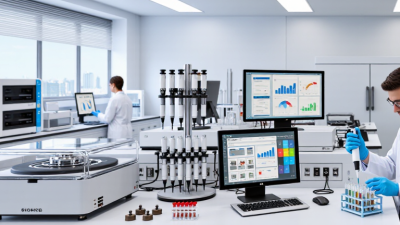
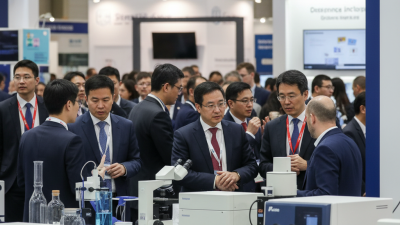
Choosing China’s top Laboratory Apparatus suppliers requires more than comparing prices on a product page. Global buyers need dependable quality, clear specifications, and practical communication throughout the purchasing process. A supplier may offer beakers, test tubes, glass reactors, microscopes, or laboratory furniture, but each item deserves careful evaluation.
This guide examines how experienced buyers assess Chinese manufacturers and trading companies. It considers production capability, material selection, dimensional accuracy, quality inspection, packaging, and export support. Details matter. A well-packed glass flask should arrive without cracks, chips, or loose protective material. Stainless steel equipment should show consistent welding and a clean surface. Product photos alone cannot prove these standards.
Reliable suppliers usually provide technical drawings, test records, samples, and responsive answers from trained staff. Buyers should also confirm relevant certifications and verify whether documents match the actual products. Factory visits, independent inspections, and small trial orders can reduce uncertainty. No supplier is perfect. That assumption can fail.
The following overview helps global purchasers compare China’s leading Laboratory Apparatus suppliers with greater confidence. It highlights practical selection criteria, common communication gaps, and questions worth asking before signing a contract. Shipping experience also matters, especially when equipment includes fragile glassware or sensitive instruments. A competitive quotation is useful, but consistent performance is more valuable over time.

China’s laboratory apparatus manufacturing landscape is shaped by scale, dense supply chains, and rising research investment. The National Bureau of Statistics reported that China spent about RMB 3.33 trillion on research and development in 2023, equal to 2.64% of GDP. This demand supports production of glassware, thermal equipment, analytical instruments, cleanroom items, and laboratory furniture.
The manufacturing base is highly concentrated in coastal industrial clusters. Buyers can often source machined parts, stainless steel frames, molded plastics, and electronic controls within short transport distances. WTO trade data also confirms China’s position as the world’s largest merchandise exporter in 2023. That advantage can shorten lead times and support customized production. However, lower pricing alone proves little. Experienced buyers should review calibration records, material certificates, factory process controls, and packaging tests before placing volume orders.
Quality remains uneven. It does. Some suppliers provide excellent documentation, while others rely too heavily on visual inspection. Third-party testing, sample approval, and batch traceability reduce this risk. International laboratory users should also check electrical safety, measurement uncertainty, corrosion resistance, and compatibility with local standards. China’s manufacturing capability is broad, but supplier evaluation still requires patience, technical questions, and occasional uncomfortable revisions to the purchasing plan.

China’s laboratory apparatus suppliers serve global buyers across several practical product categories. Core offerings include borosilicate glassware, plastic consumables, balances, centrifuges, ovens, water baths, and sample-preparation equipment. Buyers can also source microscopes, electrochemical meters, chromatography accessories, and basic molecular biology tools. These products support education, pharmaceutical testing, food analysis, environmental monitoring, and industrial quality control.
Market data shows steady demand. MarketsandMarkets estimates the global laboratory equipment market will grow from about USD 15.9 billion in 2023 to USD 20.7 billion by 2028. Grand View Research also reports continued expansion, although its figures differ because it includes broader equipment segments.
This difference matters. Buyers should compare definitions before trusting headline numbers.
Chinese manufacturers commonly compete through broad catalogs, flexible quantities, and customized fittings. A 250 milliliter flask, for example, may require a specific joint size, wall thickness, and heat-resistance grade.
Analytical instruments and laboratory safety products require closer technical review. Check calibration records, electrical standards, material certificates, and documented quality procedures. ISO 17025 guidance remains useful when evaluating testing competence and measurement reliability.
Small details matter. A supplier may provide attractive pricing but limited after-sales support. That weakness can disrupt experiments, especially when replacement parts are unavailable.
Buyers should request sample inspection, packaging photographs, inspection reports, and clear tolerance data before placing large orders. Not every catalog specification is equally precise. That deserves careful questioning.
When evaluating Chinese laboratory apparatus suppliers, quality means repeatable performance, not a polished website. Ask for approved drawings, material certificates, process controls, and final inspection records. The ISO Survey 2022 reported more than 1.26 million ISO 9001 certificates worldwide. That figure shows quality systems are widespread, not automatically effective. Request the certificate scope and verify its issuing body. An unrelated certificate proves little.
Production evidence matters at the workbench. Check calibration labels on balances, thermometers, pressure gauges, and torque tools. Review calibration intervals and traceability to recognized national standards. For glassware, examine wall consistency, joint finish, and thermal-shock testing. For metal assemblies, inspect weld penetration, surface treatment, and leak-test records. Ask for a sample lot, not a showroom piece. Measure temperature uniformity across the chamber, rather than trusting one center reading. WHO’s Laboratory Quality Management System guidance emphasizes documented processes, competent staff, and continual improvement. Still, documents can be staged. A sealed sample and an unannounced production check reveal more. That approach costs time, but so does rework.
Tips: Use a three-point review: factory audit, independent pre-shipment inspection, and random batch testing. Require serial-number traceability, change-notification clauses, and corrective-action evidence. Do not accept “equivalent” materials without written approval. One weakness remains: smaller suppliers may lack polished records while producing reliable equipment. Judge evidence, not paperwork style.
China’s laboratory apparatus suppliers serve universities, hospitals, and industrial laboratories worldwide. Export capability depends on more than factory capacity. Reliable suppliers prepare commercial invoices, packing lists, certificates of origin, and accurate HS codes. They also understand destination-specific customs requirements.
In practice, buyers should examine ISO 9001 records, material certificates, calibration reports, and product test data. Electrical equipment may require CE, UKCA, or other market-specific conformity evidence. Glassware and metal instruments need clear material specifications. Traceable lot numbers matter. They connect each shipment to inspection records and production dates. Packaging also deserves attention. Shock-resistant foam, moisture barriers, and visible handling labels can prevent costly damage. Still, certificates can be outdated. That is an uncomfortable detail, but it matters.
Tips: Request samples before placing a large order. Ask for recent certificates, not scanned documents from years ago. Confirm whether testing covers the exact model and voltage. Check calibration intervals and uncertainty values. Review Incoterms, insurance coverage, and spare-part support in writing. A pre-shipment inspection can reveal loose fittings, inaccurate markings, or incomplete manuals. Do not rely only on polished websites. Direct questions often show a supplier’s real expertise. Some buyers overlook translation quality, too. A poorly translated warning can create operational confusion, even when the apparatus itself is well made.
| Evaluation Dimension | Relevant Requirement or Standard | What Global Buyers Should Verify | Recommended Evidence |
|---|---|---|---|
| Quality management | ISO 9001:2015 certification, where applicable | The certificate scope should cover the manufacture or trading activities relevant to the laboratory apparatus being purchased. | Valid certificate, issuing-body details, scope, expiry date, and audit status. |
| Testing laboratory competence | ISO/IEC 17025 applies to competent testing and calibration laboratories. | A supplier should identify whether product tests are performed internally or by an independent competent laboratory. | Test reports showing methods, equipment, uncertainty where relevant, sample identification, and laboratory accreditation details. |
| Electrical laboratory equipment | IEC 61010-1 is commonly relevant to safety requirements for electrical measurement, control, and laboratory equipment. | Confirm whether the specific model and intended market require electrical safety assessment or additional national requirements. | Declaration of conformity, safety test report, rating label, user manual, and applicable model number. |
| European market access | CE marking may apply depending on the product category and applicable European Union legislation. | CE is not a universal quality mark; verify the applicable directives or regulations and the responsible economic operator information. | EU Declaration of Conformity, technical documentation reference, risk assessment, and product labeling photographs. |
| Restricted substances | RoHS may apply to electrical and electronic equipment; REACH obligations may apply to substances and articles supplied into the EU. | Check the product category, exemptions, material composition, and whether declarations cover the exact shipped configuration. | RoHS test report or declaration, REACH statement, material declaration, and supplier-chain confirmation. |
| Calibration and traceability | Calibration should be traceable to recognized national or international measurement standards where measurement accuracy is critical. | Review calibration intervals, acceptance criteria, environmental conditions, and uncertainty information. | Calibration certificate, serial-number linkage, reference standards, uncertainty statement, and next-due date. |
| Glass and plastic apparatus | Material and dimensional requirements should be defined by the applicable product specification or recognized laboratory glassware standard. | Verify material grade, thermal and chemical resistance, dimensional tolerance, graduation accuracy, and cleanliness requirements. | Material certificate, dimensional inspection record, batch number, product drawing, and sample approval record. |
| Chemical and biological safety | Safety Data Sheets may be required for chemical products; laboratory apparatus must be assessed for the intended chemical, thermal, and biological exposure. | Confirm compatibility with solvents, acids, bases, heat, pressure, sterilization, or biological materials as applicable. | Chemical compatibility chart, SDS where applicable, operating limits, cleaning instructions, and risk-control information. |
| Export documentation | Commercial invoice, packing list, transport document, and customs classification information are commonly required for international shipments. | Ensure the legal seller, consignee, origin, quantity, net and gross weight, product description, and customs data are consistent. | Draft invoice, packing list, HS-code proposal, certificate of origin where needed, and shipping-document sample. |
| International delivery terms | Incoterms® 2020 define responsibilities, costs, and risk allocation between seller and buyer. | The quotation should state the named place, selected Incoterms rule, insurance responsibility, export clearance, and delivery lead time. | Signed quotation or contract with the exact Incoterms rule, named location, shipment schedule, and insurance terms. |
| Packaging and transit protection | Packaging should reflect fragility, moisture sensitivity, vibration exposure, and applicable transport restrictions. | Pay particular attention to glassware, precision instruments, temperature-sensitive items, and equipment containing batteries or pressure vessels. | Packaging specification, drop or vibration validation where relevant, photos, shock indicators, and damage-claim procedure. |
| Battery and dangerous-goods controls | Lithium batteries transported by air may require UN 38.3 test-summary information and transport documentation, depending on the shipment. | Identify battery chemistry, watt-hour rating, packing configuration, transport mode, and carrier requirements before dispatch. | UN 38.3 test summary, battery specification, SDS where applicable, dangerous-goods declaration, and packaging instructions. |
| Production and inspection control | A documented inspection process should cover incoming materials, in-process controls, final inspection, nonconformity handling, and release authorization. | Ask how specifications, revisions, sampling plans, corrective actions, and batch records are controlled. | Quality-control plan, inspection checklist, sample report, corrective-action record, and lot or serial-number traceability. |
| After-sales and service support | Service requirements depend on product complexity, installation conditions, software, calibration needs, and spare-parts availability. | Confirm warranty duration, response time, remote support, repair route, spare-parts availability, and local service arrangements. | Warranty terms, service-level agreement, troubleshooting guide, spare-parts list, training plan, and escalation contacts. |
Note: Certification and regulatory requirements vary by product type, destination market, intended use, and transport method. Buyers should verify current requirements and confirm that every document applies to the exact model and shipment configuration.
Choosing a Chinese laboratory apparatus supplier requires more than comparing prices. Start with your process, not the catalog. List required temperature ranges, materials, accuracy, capacity, and daily workload. Then ask whether the supplier has served similar laboratories. Request test reports, calibration records, factory photographs, and a recent production sample. Specific evidence matters more than polished sales language.
A dependable supplier should explain quality controls clearly. Ask how incoming materials are inspected and how final units are tested. For measuring equipment, confirm calibration traceability and certificate validity. For glassware or heating tools, inspect surface finish, seals, wiring, and protective packaging. Do not overlook documentation. English manuals, inspection records, spare-part lists, and compliance documents reduce installation delays. Independent verification is wise when specifications affect safety or repeatability.
Communication often reveals operational maturity. Test response times with detailed technical questions, not only price requests. Confirm production lead time, minimum order quantity, payment terms, warranty scope, and replacement procedures. A video audit can help, but it cannot replace physical inspection for critical orders. Start with a small batch when possible. This exposes packing weaknesses early. A low quote may look attractive, yet inconsistent tolerances can cost more through rework. One difficult truth remains: no supplier is perfect. Record defects, request corrective actions, and review performance after delivery.
This procurement framework assigns a 100-point evaluation weight to the factors most commonly used by global laboratory buyers. Compliance and product quality receive the highest weighting, followed by documentation, technical support, delivery reliability, and total cost of ownership. Buyers should adjust the weighting according to their application, regulatory requirements, and purchasing volume.