What Is a Centrifuge Tube Used For?
A Centrifuge Tube is a laboratory container designed to hold samples during centrifugation. It helps separate materials by density when a rotor spins at high speed. Common samples include blood, urine, cell suspensions, proteins, and environmental extracts. The tube keeps the sample contained while centrifugal force moves heavier particles downward.
Its design supports both safety and accuracy. Many tubes use polypropylene because it resists common laboratory chemicals and repeated handling. Some models tolerate freezing, heating, or high-speed rotation. However, not every tube suits every procedure. A tube rated for low-speed work may fail in an ultracentrifuge. Always check the manufacturer’s specifications.
Small details matter. A tight cap reduces leakage during spinning. A clear wall makes the pellet easier to inspect. A readable graduation line supports consistent measurements. Researchers also balance tubes by mass, not merely by appearance. Even a small imbalance can cause vibration, rotor damage, or an interrupted experiment.
In clinical and research settings, proper tube selection protects sample quality. It also supports reliable, repeatable results. Yet practical mistakes still happen. Tubes may be overfilled, mislabeled, or exposed to incompatible temperatures. These errors can affect interpretation. Careful preparation remains essential.
This guide explains what a Centrifuge Tube is used for, how it works, and which features influence performance. It also considers material, capacity, sterilization, and speed limits. The goal is practical understanding, not a one-size-fits-all answer. Different samples require different choices.
What Is a Centrifuge Tube?
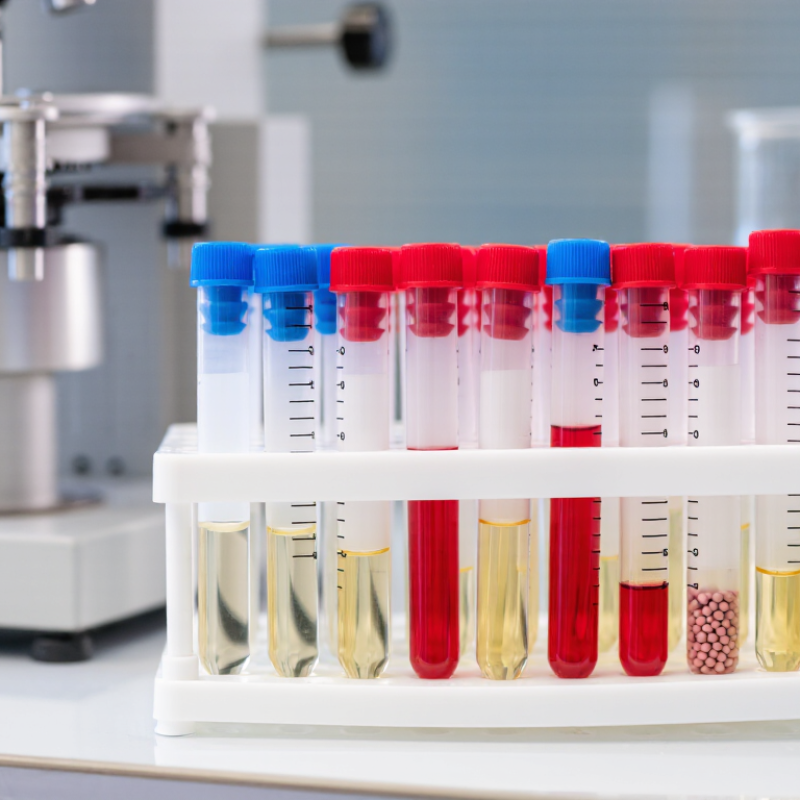
A centrifuge tube is a small laboratory container designed to hold liquid samples during centrifugation. It is usually made from polypropylene or another chemical-resistant plastic. Its shape supports stable spinning, often with a conical or rounded bottom. A secure cap helps prevent leakage, evaporation, and contamination.
Inside the tube, a sample may contain blood components, cells, proteins, soil particles, or other suspended materials. When the rotor spins, centrifugal force separates substances according to density. Heavier particles move toward the bottom, while lighter liquid remains above them. The separated layers can then be removed, measured, or tested. Centrifuge tubes are available in several sizes, such as 1.5 milliliters, 15 milliliters, and 50 milliliters.
Correct handling matters. The tube must fit the centrifuge rotor and stay within its rated speed and force limits. Balance opposing tubes carefully by mass, not only by appearance. A tube that looks full may still weigh less than its partner. Check the cap, inspect the tube for cracks, and avoid overfilling it. Some materials become brittle after repeated freezing or exposure to strong chemicals. This detail is easy to miss. In practical laboratory work, clear labeling and gentle transfer are equally important, because a well-separated sample can still become unreliable through poor handling.
What Is a Centrifuge Tube Used For? - What Is a Centrifuge Tube?
| Tube Type |
Common Capacity |
Typical Material |
Primary Uses |
Typical Centrifugation Range |
Key Features |
| Microcentrifuge Tube |
0.5–2.0 mL |
Polypropylene |
DNA and RNA purification, protein extraction, PCR preparation, sample separation, and small-volume laboratory procedures. |
Often suitable for high-speed microcentrifuges; the permitted RCF must be confirmed from the tube specification. |
Small working volume, snap or screw cap, low sample consumption, and compatibility with many molecular biology workflows. |
| Conical Centrifuge Tube |
15 mL |
Polypropylene or polystyrene |
Cell washing, microbial culture processing, protein precipitation, nucleic acid handling, and general sample preparation. |
Commonly used at low to medium RCF values, depending on the material, rotor, and tube design. |
Conical bottom helps collect pellets and improves recovery of small amounts of sediment. |
| Conical Centrifuge Tube |
50 mL |
Polypropylene or polystyrene |
Large-volume cell harvesting, sample concentration, buffer exchange, washing steps, and clinical or research sample preparation. |
Suitable RCF varies by tube design; the manufacturer’s maximum RCF should always be followed. |
Provides greater working volume while retaining a conical bottom for pellet collection. |
| Ultracentrifuge Tube |
Approximately 2–100 mL |
Specialized polypropylene or other high-strength materials |
Separation of viruses, ribosomes, membrane vesicles, lipoproteins, nanoparticles, and other very small particles. |
Designed for extremely high RCF values in specialized ultracentrifuges. |
Requires exact matching of tube, rotor, adapters, fill volume, and centrifuge conditions. |
| Blood Collection Tube |
Approximately 2–10 mL |
Glass or plastic |
Separation of serum, plasma, or cellular components from whole blood for laboratory testing. |
Usually operated at low to medium RCF values according to the test method and tube additive. |
May contain additives such as anticoagulants, clot activators, or separating gel; tube selection affects test results. |
| Capillary Centrifuge Tube |
Approximately 50–100 µL |
Glass or plastic |
Microhematocrit testing and measurement of packed red-cell volume from small blood samples. |
Used in dedicated microhematocrit centrifuges at high rotational speeds. |
Very small sample requirement and narrow internal diameter; often sealed before centrifugation. |
| Thick-Walled Glass Tube |
Varies by laboratory application |
Borosilicate or other laboratory glass |
Organic solvent work, density-gradient separations, and applications requiring chemical resistance or visual inspection. |
Must be used only at the RCF and rotor conditions approved for the specific tube. |
Good chemical resistance but may be vulnerable to breakage, thermal shock, and imbalance. |
Safety note: A centrifuge tube is used to contain and separate liquid or suspended solid samples during centrifugation. Always balance tubes by mass, inspect them for damage, use compatible rotors and adapters, and follow the tube’s stated maximum RCF, temperature, fill volume, and chemical-compatibility limits.
How Does a Centrifuge Tube Work?
A centrifuge tube is a small vessel designed to hold samples during high-speed rotation. Its main job is containment, but its shape also supports separation. The tube fits inside a rotor, which spins around a fixed axis. This motion creates relative centrifugal force, commonly written as RCF or ×g. Denser particles move toward the bottom, while lighter liquids remain above them. A compact pellet often forms at the base.
The centrifuge tube does not separate samples by speed alone. Rotor radius, rotation speed, liquid density, and viscosity all matter. RPM can mislead because the same speed produces different forces in different rotors. Laboratory protocols therefore specify RCF, not only RPM. The Global Centrifuge Market report by Grand View Research estimated the market at about USD 2.1 billion in 2023. That scale reflects widespread use in clinical, research, and industrial laboratories.
Balance is critical. Opposite tubes should have matching mass, not merely matching volume. A difference of a few grams can create vibration, noise, or tube failure at high force. The CDC and NIH Biosafety in Microbiological and Biomedical Laboratories guidance recommends sealed systems when centrifugation may generate aerosols. Tube material also matters; some plastics tolerate organic solvents or freezing better than others. ISO 15189:2022 emphasizes controlled procedures, equipment checks, and traceable laboratory work. In practice, small handling mistakes still occur. The tube is simple. The physics is not.
What Are Centrifuge Tubes Used For?
What Are Centrifuge Tubes Used For?
Centrifuge tubes hold liquid samples during spinning in a laboratory centrifuge. Their main purpose is to separate materials according to density. Heavier particles move toward the bottom, forming a compact pellet. Lighter liquids remain above it.
Researchers use these tubes for blood separation, cell collection, protein extraction, and nucleic acid preparation. They can also collect precipitated chemicals or remove unwanted debris from a solution. A clear upper layer often reveals useful information. For example, separated plasma may support later testing, while a cell pellet can be washed and examined.
Tube selection affects the quality of the result. The material must tolerate the required centrifugal force, temperature, and chemicals. Capacity matters, too. Overfilling can cause leakage, while underfilling may make balancing difficult. Centrifugal force should be checked in relative centrifugal force, not only revolutions per minute. These values are not interchangeable.
Balance the rotor carefully.
In routine laboratory work, I have seen small handling errors change a clean separation. A tube with a scratched wall may fail under stress. A cap that seems secure may still leak. Inspecting tubes before use is simple, but it is easy to skip during busy work. I once underestimated how much sample residue could affect a later measurement. That mistake reinforced the need for clean tubes, accurate labeling, and consistent handling. Centrifuge tubes are not just containers; they directly influence sample safety and data reliability.
What Types of Centrifuge Tubes Are Available?
What Is a Centrifuge Tube Used For?
What Types of Centrifuge Tubes Are Available?
Centrifuge tubes hold liquid samples during spinning. Their design helps separate cells, proteins, particles, or precipitates by density. Different experiments require different tube types.
Plastic tubes are common for routine laboratory work. Polypropylene tubes resist many chemicals and tolerate repeated temperature changes. Polystyrene tubes are clearer but usually suit gentler conditions. Glass tubes offer strong chemical resistance and excellent visibility. However, they can break under impact or excessive force.
Conical tubes collect sediment at the pointed bottom. They work well for cell pellets and small-volume samples. Round-bottom tubes support smoother fluid movement during high-speed runs. Microcentrifuge tubes handle tiny samples, often from a few microliters to several milliliters. Larger tubes serve bulkier samples and longer processing steps.
Tube caps also vary. Snap caps are convenient for quick handling. Screw caps provide stronger sealing and reduce leakage risks. Some tubes are sterile, graduated, or designed for low-temperature use. Check the material, maximum RCF, temperature range, and chemical compatibility before spinning. RPM alone can mislead, because rotor radius changes the actual force.
A small mistake can ruin a run. Even experienced users sometimes choose tubes by volume alone. That habit needs reconsideration. Fill levels, tube balance, and rotor compatibility matter just as much. When uncertainty remains, consult the tube’s technical documentation and test a low-risk sample first.
How Should Centrifuge Tubes Be Selected and Handled?
Selecting a centrifuge tube starts with the protocol, not the tube rack. Check sample volume, solvent, temperature, and required relative centrifugal force (RCF). A tube rated for 15,000 × g may fail when used with a dense solution or an unsuitable rotor. Always match the tube’s maximum RCF to the rotor radius and speed. The WHO Laboratory Biosafety Manual, fourth edition (2020), stresses equipment compatibility, inspection, and containment during centrifugation.
Material choice matters. Polypropylene usually tolerates stronger solvents, heat, and higher RCF than many general-purpose plastics. Polyethylene tubes can be useful for gentle processing but may deform under heat or force. Confirm chemical compatibility from technical data, especially with acids, alcohols, and organic solvents. Sterile tubes are needed for cell culture and microbiological work. Low-binding surfaces may reduce protein loss, though this benefit depends on the sample.
Balance by mass, not appearance. Two tubes with equal volume may weigh differently because their liquids have different densities. The CDC and NIH Biosafety in Microbiological and Biomedical Laboratories, 6th edition (2020), recommends secured lids, balanced loads, and controlled opening after runs. Inspect every tube for cracks, whitening, leaks, or distorted caps. Do not reuse a disposable tube merely because it looks clean. I have seen “minor” scratches become failures during high-speed runs. That judgment deserves reconsideration. Record rotor type, RCF, temperature, and tube lot when results must be traceable.
What Is a Centrifuge Tube Used For?
Centrifuge tubes hold liquid samples during centrifugation, allowing particles to separate by density under centrifugal force. Selection depends on sample volume, rotor compatibility, chemical resistance, temperature, and required relative centrifugal force (RCF).
Typical nominal capacities: Microcentrifuge tubes are commonly used for small-volume molecular biology samples, while conical tubes are used for larger cell, protein, and solution samples. Actual capacity, maximum RCF, temperature range, and chemical compatibility vary by tube design and must be checked before use.
- Balance tubes by mass and place them symmetrically in the rotor.
- Do not exceed the stated fill volume or maximum RCF.
- Inspect tubes for cracks, deformation, leaks, or damaged caps before spinning.
- Secure caps and use sealed rotors or safety cups when working with hazardous or aerosol-generating samples.