[language-switcher]

Top 10 Science Equipment Manufacturers in China

China’s Science Equipment market includes manufacturers serving laboratories, universities, hospitals, and industrial research teams. Their catalogs may range from microscopes and centrifuges to environmental chambers and analytical instruments. A polished product page, however, tells only part of the story. Buyers also need clear specifications, dependable calibration support, accessible documentation, and service after installation.

This introduction to the Top 10 Science Equipment Manufacturers in China is intended as a practical starting point, not an official ranking. The companies should be compared by product focus, manufacturing capability, quality controls, customization options, and technical support. Look closely at details: stated measurement ranges, materials, warranty terms, and response times. Small differences can matter. A microscope used for routine teaching has different needs from one supporting advanced imaging. Likewise, a low purchase price may not reflect the full cost of maintenance or training. Product information can change, and published claims should be checked directly with each manufacturer.

Physicist Richard Feynman cautioned, “The first principle is that you must not fool yourself—and you are the easiest person to fool.” His reminder is useful when evaluating instruments: verify claims, request relevant records, and match specifications to real working conditions. Not every buyer will weigh these factors equally. That is a limitation of any broad comparison, and it is worth acknowledging. Still, a careful shortlist can make supplier discussions more focused and help readers identify equipment suited to their actual research needs.
Top 10 Science Equipment Manufacturers in China

Scope of Science Equipment: Analytical, Measurement, and Laboratory Systems

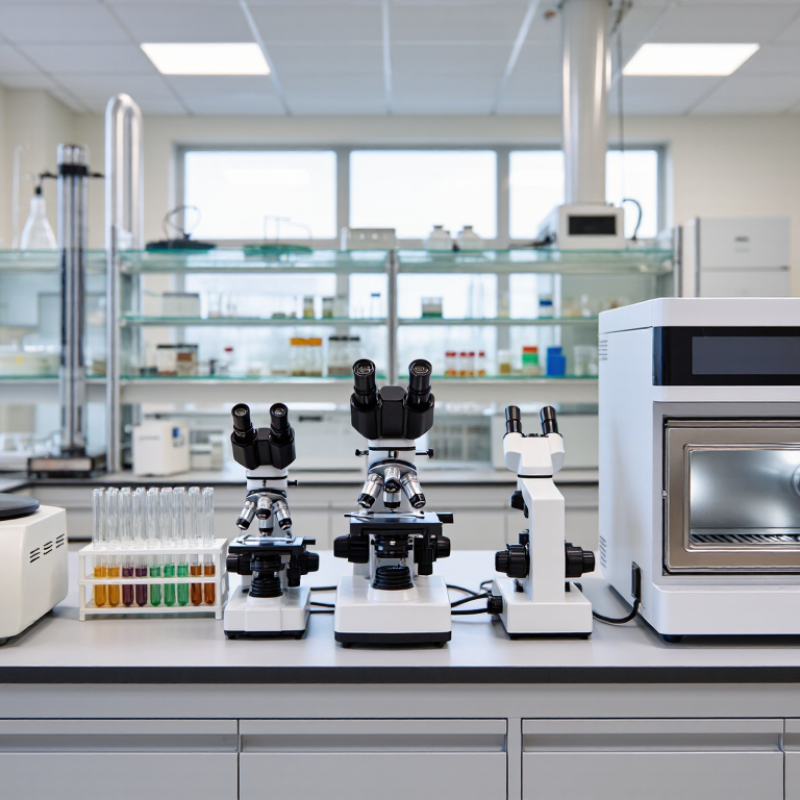
Science equipment covers more than instruments displayed in a catalog. In China, manufacturers serve analytical, measurement, and laboratory workflows, from sample preparation to data review. Analytical systems examine composition, purity, or structure using methods such as chromatography, spectroscopy, and thermal analysis. The right setup depends on the sample, detection limits, and daily workload. Small details matter. A credible top-ten comparison should separate these categories rather than rank every device by price.

Measurement equipment tracks physical conditions and dimensional changes. Examples include balances, pressure gauges, temperature sensors, optical tools, and environmental monitors. Buyers should check range, resolution, repeatability, calibration support, and operating conditions—not just a headline accuracy figure. A sensor may perform well in a stable room but drift near heat, vibration, or humidity. Not just specifications.

Laboratory systems connect instruments with benches, ventilation, water treatment, storage, and software. Evaluate how equipment will be installed, maintained, and used by staff. Request test data, service response times, spare-parts information, and clear user documentation. Check that results can be exported in usable formats. Published specifications may not reveal performance with a particular sample, so a representative test is valuable. Even capable manufacturers can have uneven strengths across product categories; compare each instrument against a defined protocol before purchasing.
China’s 2024 R&D Spending Reached RMB 3.61 Trillion, or 2.68% of GDP

China’s 2024 R&D spending reached RMB 3.61 trillion, or 2.68% of GDP. That investment creates demand for reliable instruments, from microscopes and analytical balances to environmental testing systems. For readers comparing science equipment manufacturers in China, the national figure is useful context, not a guarantee of quality. Spending does not automatically produce precise calibration, durable parts, or responsive service.

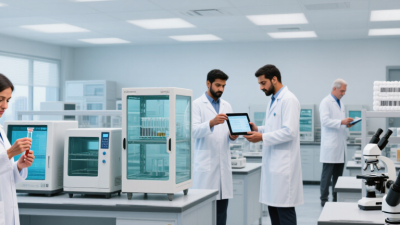
A strong manufacturer should explain instrument specifications clearly and provide practical support after installation. Ask how equipment is calibrated, whether spare parts are available, and what training comes with delivery. A clean laboratory bench, clear maintenance records, and a technician who can describe routine checks are useful signs. Still, progress may be uneven. A large research budget cannot tell you how well one supplier serves a smaller laboratory.

Tips: Compare products against your actual testing needs. Request sample reports, service details, and realistic delivery times. Check that stated accuracy matches your required methods. Small details matter. If a specification is unclear, ask for clarification before purchasing.

China’s R&D Spending Reached RMB 3.61 Trillion in 2024

National R&D expenditure and R&D intensity, 2020–2024

China’s R&D expenditure rose from RMB 2.44 trillion in 2020 to RMB 3.61 trillion in 2024. Over the same period, R&D intensity increased from 2.40% to 2.68% of GDP.

Source: National Bureau of Statistics of China. Figures are annual national totals; expenditure is shown in current RMB.

Ranking Criteria: Product Range, Accuracy, Certifications, and Service Networks

Top 10 Science Equipment Manufacturers in China

A useful ranking starts with product range, but catalog size alone can mislead. Compare instruments across core laboratory needs, such as sample preparation, measurement, and environmental control. Check whether listed models include clear specifications, compatible accessories, and available consumables. Fit matters. A broad range is valuable only when equipment works reliably in the intended setting.

Accuracy should be judged through published tolerances, repeatability data, and calibration documentation. Ask how measurements are verified and whether calibration services are accessible. The National Bureau of Statistics reported that China’s research and development expenditure reached 3.33 trillion yuan in 2023, or 2.64% of GDP. This investment signals a substantial research environment, but it does not prove that any individual instrument performs well. Test evidence still matters.

Certifications deserve careful reading. Verify the certificate’s scope, issuing body, and validity; a quality-management certificate does not certify every model’s measurement accuracy. ISO/IEC 17025 accreditation is relevant when evaluating testing or calibration laboratories, not as a blanket endorsement of a manufacturer. Service networks should be assessed with equally practical questions: Are spare parts stocked locally? What is the typical repair window? Can technicians support installation and user training? A nearby service point can reduce downtime. No scorecard is perfect; published service promises may not reflect response times at a specific site.

Top 10 Science Equipment Manufacturers in China - Ranking Criteria: Product Range, Accuracy, Certifications, and Service Networks

This company-name-free table is a category-level reference, not a verified ranking of individual manufacturers. Listed specifications are representative examples; actual performance depends on the model, configuration, test method, and operating conditions. Standards and certification requirements are product- and market-dependent and should be checked against current documentation.

Rank Equipment Category Typical Product Range Representative Accuracy or Performance Metric Relevant Standards or Certification Checks Service-Network Evidence to Verify
1 Analytical Balances Precision balances, analytical balances, microbalances, and weighing accessories. Readability commonly ranges from 0.1 mg to 0.01 mg for analytical models; verify repeatability and linearity for the specific model. Check applicable weighing-instrument requirements, such as OIML R 76, and electrical-safety requirements such as IEC 61010-1. Confirm local installation, leveling, calibration, adjustment, and access to certified calibration services.
2 Pipettes and Liquid-Handling Equipment Single- and multichannel pipettes, electronic pipettes, dispensers, and pipette controllers. Permissible systematic and random errors depend on volume and pipette class; ISO 8655 provides relevant test methods and limits. Check the applicable parts of ISO 8655, calibration records, and any market-specific conformity documentation. Verify local pipette calibration, repair, preventive maintenance, and availability of replacement seals and tips.
3 pH and Electrochemical Meters Benchtop and portable pH meters, conductivity meters, ion meters, and compatible electrodes. Many laboratory pH meters specify approximately ±0.01 to ±0.02 pH; electrode condition and calibration affect measurement results. Check electrical-safety and electromagnetic-compatibility documentation, including applicable IEC 61010 and IEC 61326 requirements. Confirm electrode replacement availability, calibration support, and access to suitable buffer solutions and maintenance services.
4 UV-Visible Spectrophotometers Visible and UV-Vis instruments, scanning models, microvolume systems, and sample accessories. Representative wavelength-accuracy specifications often fall around ±0.3 to ±2 nm; photometric accuracy and repeatability vary by model. Check applicable IEC 61010-1 and IEC 61326 documentation, plus traceable wavelength and photometric verification records. Verify local optical alignment, performance qualification, lamp replacement, software support, and repair capability.
5 Laboratory Centrifuges Microcentrifuges, benchtop and floor-standing centrifuges, refrigerated models, rotors, and adapters. Speed-control specifications are model-dependent; manufacturers commonly state speed tolerance in rpm or relative centrifugal force (RCF). Check applicable centrifuge safety requirements, including IEC 61010-2-020, and the relevant general electrical-safety documentation. Confirm rotor inspection and service options, balancing support, refrigeration repair, and availability of compatible rotors and parts.
6 Laboratory Incubators and Ovens General-purpose incubators, refrigerated incubators, drying ovens, and temperature-controlled chambers. Temperature uniformity and stability are model-specific; representative published uniformity values may range from about ±0.5°C to ±2°C. Check applicable IEC 61010-1 and IEC 61010-2-010 requirements and request temperature-mapping or calibration records where needed. Verify local temperature calibration, mapping, door-seal replacement, controller repair, and response times for service calls.
7 Laboratory Autoclaves Benchtop and vertical steam sterilizers, laboratory autoclaves, and sterilization accessories. Temperature accuracy alone does not establish sterilization performance; cycle validation must consider the load, time, temperature, and process conditions. Review applicable sterilizer safety requirements, such as IEC 61010-2-040, and process-validation guidance such as ISO 17665 where relevant. Confirm installation qualification, cycle validation support, pressure-system maintenance, and availability of trained local technicians.
8 Environmental Test Chambers Temperature, humidity, stability, and climatic chambers for laboratory and product-testing applications. Temperature fluctuation, spatial uniformity, and humidity tolerance are model- and test-condition-dependent; request chamber mapping data. Check applicable electrical-safety and EMC documentation, plus calibration traceability for temperature and humidity measurements. Verify chamber installation, temperature and humidity mapping, refrigeration-system repair, and local spare-parts availability.
9 Optical Microscopes Educational, biological, metallurgical, stereo, and digital imaging microscopes with optional cameras and analysis software. Magnification is not a direct measure of accuracy; image scale and dimensional measurements require suitable calibration, such as a stage micrometer. Check applicable electrical-safety documentation for powered systems and request calibration or verification procedures for measurement functions. Confirm objective and illumination servicing, camera and software support, optical alignment, and availability of local repair services.
10 Laboratory Water-Purification Systems Reverse-osmosis, deionization, distilled-water, and ultrapure-water systems with storage and dispensing options. Type I systems commonly target resistivity of 18.2 MΩ·cm at 25°C; actual water quality depends on feedwater, maintenance, and measurement practice. Review the required water-quality specification for the application, such as ASTM D1193, and verify system performance with appropriate measurements. Check local filter and cartridge supply, sanitization, installation, water-quality testing, and preventive-maintenance coverage.

Profiles of 10 Chinese Manufacturers Across Major Equipment Categories

A category-led view reveals more than a simple ranking. Analytical-instrument makers focus on stable readings and traceable calibration. Microscope producers balance optical clarity with practical serviceability. Centrifuge manufacturers must manage rotor balance, noise, and heat. Environmental-chamber makers control temperature and humidity across test cycles. Chromatography equipment suppliers prioritize flow stability and detector sensitivity. These details matter on a working laboratory bench.

Industrial-robot makers emphasize repeatable motion and safe integration. Machine-tool manufacturers compete on rigidity, accuracy, and uptime. Metrology-equipment producers support inspection with precise sensors and software. Medical-imaging equipment makers must consider image quality and maintenance access. Agricultural-testing equipment manufacturers help measure soil and crop conditions. The International Federation of Robotics reported 276,288 industrial robot installations in China in 2023, about 51% of global installations. China’s National Bureau of Statistics reported 556,000 industrial robots produced in 2024, up 14.2%. These figures show manufacturing scale, not product quality. Buyers should compare calibration records, application support, and spare-parts availability. A polished catalogue can still hide uneven service; that deserves scrutiny.

Compare Technical Specifications, Calibration Standards, and Global Reach

Comparing China’s leading science equipment manufacturers requires more than reading headline specifications. Check measurement range, resolution, repeatability, and operating conditions side by side. A balance showing 0.01 g readability, for example, may still perform differently across temperature or vibration changes. Ask for test data under conditions close to your laboratory’s daily use. Details matter.

Calibration standards are just as important. Look for documented procedures, stated uncertainty, and traceability to recognized national or international measurement standards. Where relevant, confirm whether calibration is performed by a laboratory accredited to ISO/IEC 17025; accreditation applies to specific scopes, not every service. A certificate alone is not proof of lasting accuracy. Review recalibration intervals and available service records, too.

Global reach affects ownership after purchase. Compare local service coverage, response times, spare-part availability, and the languages offered for manuals and technical support. Ask how quickly a replacement sensor or pump can be shipped to your region. These details are easy to overlook. They can matter more than a small price difference.

Manufacturer rankings also have limits: published specifications may not reflect long-term performance, and export networks can change. Verify claims with current documents, sample reports, and direct technical questions before making a shortlist.

Inquiry Form